kondensasyon
kondensasyón with stress marks
condensation
Usage Note
Kondensasyon is the scientific term for the process by which gas turns into liquid, taught in Philippine secondary school physics and chemistry. In everyday life it describes water droplets forming on cold surfaces like glasses or windows during the country's characteristically humid weather.
Examples
" May kondensasyon sa bintana. "
Natural Translation
There is condensation on the window.
Literal Translation
There-is condensation on window.
" Nagaganap ang kondensasyon kapag ang malamig na baso ay nalantad sa mainit na hangin. "
Natural Translation
Condensation occurs when a cold glass is exposed to warm air.
Literal Translation
Occurs the condensation when the cold glass is exposed to warm air.
" Ipinaliwanag ng guro kung paano nagaganap ang kondensasyon tuwing ang singaw ng tubig ay nadidikit sa malamig na ibabaw. "
Natural Translation
The teacher explained how condensation happens whenever water vapor sticks to a cold surface.
Literal Translation
Explained by-the teacher how happens the condensation whenever the vapor of water clings to cold surface.
Take Tagalog with you
The full course, a 12,500-word dictionary, and flashcards that make every word stick — free to start on iOS and Android.




Tagalog builds thousands of words from a few hundred roots.
How Tagalog words workRelated Words
Explore Tagalog by topic
Free guides on grammar, vocabulary, and culture to take you past single-word lookups.

Seasons in the Philippines: A Tagalog Guide
The Philippines has two seasons, not four. Learn tag-araw, tag-ulan, and taglamig, the generative tag- prefix, and the weather vocabulary to match.

Tagalog Greetings: How to Say Hello, Goodbye & Po/Opo
Master Tagalog greetings with pronunciation: kumusta, magandang umaga, po and opo polite forms, time-of-day phrases, and the mano po tradition.
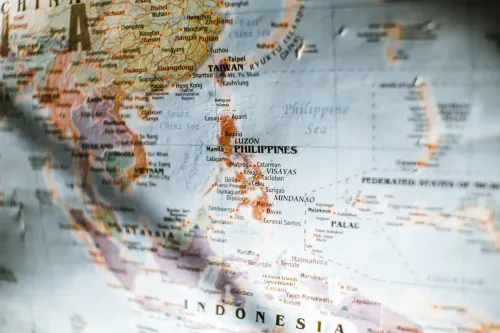
Philippines Geography for Learners: Islands & Language
Philippines geography for Tagalog learners: 7,641 islands, three island groups, and the Southern Luzon heartland where the Tagalog language was born.

Ang, Ng, Sa: The 3 Tagalog Case Markers Explained
Ang, ng, sa are the three Tagalog case markers every noun takes. Learn what each does, the personal forms si/ni/kay, plurals with mga, and clear examples.