kulangot
kulangót with stress marks
booger
Usage Note
Kulangot is the everyday informal term for dried nasal mucus, used freely in family settings and casual speech without being considered strongly vulgar, though it would be avoided in formal contexts. It is also sometimes used figuratively as a mild insult implying someone is trivial or worthless.
Examples
" May kulangot sa ilong ng bata. "
Natural Translation
There's a booger in the child's nose.
Literal Translation
Has booger in-the nose of-the child.
" Bakit may kulangot sa iyong ilong? "
Natural Translation
Why is there a booger in your nose?
Literal Translation
Why has booger in-the your nose?
" Pinunasan ng ina ang ilong ng kanyang anak dahil may kulangot na halos matulo na habang naglalaro ito sa labas. "
Natural Translation
The mother wiped her child's nose because there was a booger almost about to drip while he was playing outside.
Literal Translation
Was-wiped by-the mother the nose of-the her child because has booger that almost about-to-drip already while playing it at-the outside.
Take Tagalog with you
The full course, a 12,500-word dictionary, and flashcards that make every word stick — free to start on iOS and Android.




Tagalog builds thousands of words from a few hundred roots.
How Tagalog words workRelated Words
Explore Tagalog by topic
Free guides on grammar, vocabulary, and culture to take you past single-word lookups.

Seasons in the Philippines: A Tagalog Guide
The Philippines has two seasons, not four. Learn tag-araw, tag-ulan, and taglamig, the generative tag- prefix, and the weather vocabulary to match.

Ang, Ng, Sa: The 3 Tagalog Case Markers Explained
Ang, ng, sa are the three Tagalog case markers every noun takes. Learn what each does, the personal forms si/ni/kay, plurals with mga, and clear examples.
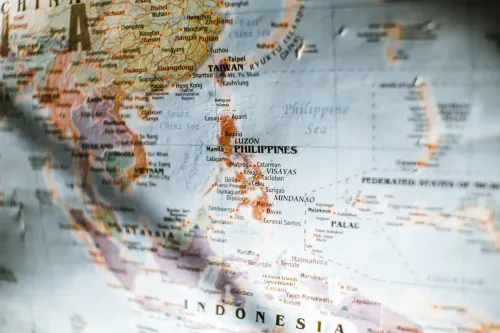
Philippines Geography for Learners: Islands & Language
Philippines geography for Tagalog learners: 7,641 islands, three island groups, and the Southern Luzon heartland where the Tagalog language was born.

Tagalog vs Filipino: What's the Difference & Which to Learn
Tagalog and Filipino aren't the same language — but they overlap almost completely. Here's the real difference and which one you should actually learn.