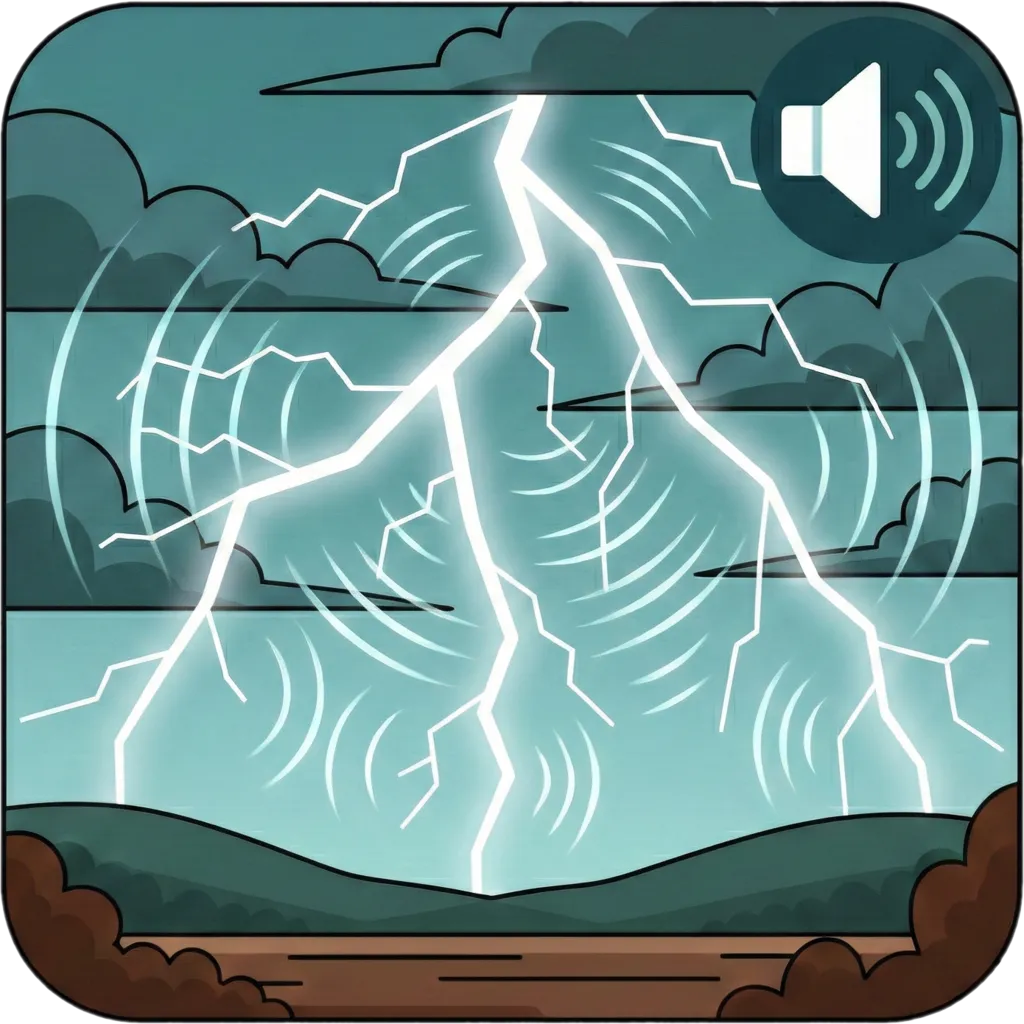
From root: kulog
Conjugations
Past (Completed)
kumulog
ku-mu-LOG
thundered
Present (Incomplete)
kumukulog
ku-mu-ku-LOG
is thundering
Future (Contemplated)
kukulog
ku-ku-LOG
will thunder
Usage Note
Kumulog is used when describing the natural sound of thunder, often functioning as an impersonal verb to state that a thunderstorm is occurring. In the Philippines, it is a common topic of conversation during the rainy season to signal an approaching downpour.
Examples
" Kumulog kagabi nang malakas. "
Natural Translation
It thundered loudly last night.
Literal Translation
Thundered last-night loudly.
" Maaaring kumulog bago ang ulan. "
Natural Translation
It might thunder before the rain.
Literal Translation
Might thunder before the rain.
" Kumukulog na nang malakas kaya nagmadali kaming umuwi bago tuluyang umulan. "
Natural Translation
It was already thundering loudly, so we hurried home before it rained completely.
Literal Translation
Thundering already loudly so hurried we go-home before completely rained.
Take Tagalog with you
The full course, a 12,500-word dictionary, and flashcards that make every word stick — free to start on iOS and Android.




Tagalog builds thousands of words from a few hundred roots.
How Tagalog words workWord family
kulog has 3 related forms built from the same root.
Related Words
Explore Tagalog by topic
Free guides on grammar, vocabulary, and culture to take you past single-word lookups.

Languages of the Philippines: Tagalog, Cebuano, and More
Languages of the Philippines: one national language (Filipino) plus 180+ regional languages. Here's who speaks what, where, and why it matters to you.

Tagalog Word Order: Sentence Structure Made Simple
Why Tagalog puts the verb first, and how ang, ng, and sa markers work. A clear guide to VSO word order, forming questions, and negation.

Tagalog Pronouns Explained: Complete Chart with Examples
Every Tagalog pronoun explained with clear charts: ang/ng/sa forms, tayo vs kami, ikaw vs ka, politeness markers, and the mistakes beginners make.

Ang, Ng, Sa: The 3 Tagalog Case Markers Explained
Ang, ng, sa are the three Tagalog case markers every noun takes. Learn what each does, the personal forms si/ni/kay, plurals with mga, and clear examples.