magkumot
to wrap oneself in a blanket

From root: kumot
Conjugations
Past (Completed)
nagkumot
nag-KU-mot
wrapped oneself in a blanket
Present (Incomplete)
nagkukumot
nag-ku-KU-mot
wrapping oneself in a blanket
Future (Contemplated)
magkukumot
mag-ku-KU-mot
will wrap oneself in a blanket
Usage Note
Magkumot is used when someone covers themselves with a blanket, typically to sleep or to stay warm when it is cold. It implies the act of pulling a blanket over one's body while lying down.
Examples
" Magkumot ka kung malamig. "
Natural Translation
Wrap yourself in a blanket if it's cold.
Literal Translation
Wrap-in-blanket you if cold.
" Malamig kaya magkumot ka. "
Natural Translation
It is cold, so wrap yourself in a blanket.
Literal Translation
Cold so wrap yourself in blanket.
" Kapag umuulan nang malakas sa gabi, gusto kong magkumot at manood ng pelikula kasama ang aking pamilya. "
Natural Translation
When it rains heavily at night, I like to wrap myself in a blanket and watch a movie with my family.
Literal Translation
When progressive-rain heavily at night, want I to-wrap-in-blanket and to-watch of movie with the my family.
Take Tagalog with you
The full course, a 12,500-word dictionary, and flashcards that make every word stick — free to start on iOS and Android.




Tagalog builds thousands of words from a few hundred roots.
How Tagalog words workWord family
kumot has 5 related forms built from the same root.
Related Words
Explore Tagalog by topic
Free guides on grammar, vocabulary, and culture to take you past single-word lookups.
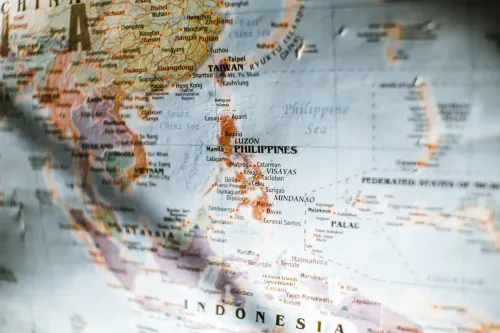
Philippines Geography for Learners: Islands & Language
Philippines geography for Tagalog learners: 7,641 islands, three island groups, and the Southern Luzon heartland where the Tagalog language was born.

Ang, Ng, Sa: The 3 Tagalog Case Markers Explained
Ang, ng, sa are the three Tagalog case markers every noun takes. Learn what each does, the personal forms si/ni/kay, plurals with mga, and clear examples.

Tagalog vs Filipino: What's the Difference & Which to Learn
Tagalog and Filipino aren't the same language — but they overlap almost completely. Here's the real difference and which one you should actually learn.
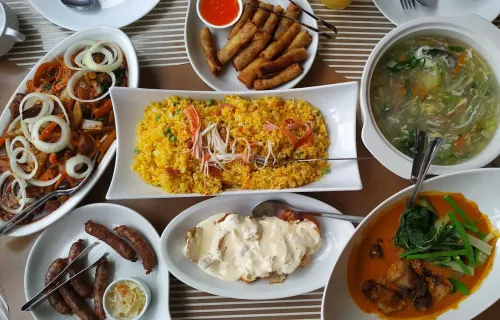
Filipino Food: 12 Essential Dishes (With Tagalog Names)
Filipino food, from adobo to halo-halo: learn the Tagalog names, pronunciations, and ingredients behind 12 dishes you'll want to try on your first trip.