kumpiskador
kumpiskadór with stress marks
confiscator
From root: kumpiska
Usage Note
Kumpiskador is derived from kumpiska with the Spanish agentive suffix -dor and refers to a person or authority that confiscates property. The term is used mostly in formal or legal contexts and is considerably less common in everyday conversation than the base verb kumpiska.
Examples
" Dumating ang kumpiskador sa palengke. "
Natural Translation
The confiscator arrived at the market.
Literal Translation
Arrived the confiscator at-the market.
" Ang kumpiskador ay kumikilos ayon sa batas. "
Natural Translation
The confiscator acts in accordance with the law.
Literal Translation
The confiscator is-acting according-to the law.
" Bago kunin ng kumpiskador ang ipinagbabawal na paninda, kailangan muna niyang ipakita ang utos mula sa korte. "
Natural Translation
Before the confiscator can take the prohibited goods, he/she must first present the order from the court.
Literal Translation
Before take by-the confiscator the prohibited goods, needed first he/she-to show the order from the court.
Take Tagalog with you
The full course, a 12,500-word dictionary, and flashcards that make every word stick — free to start on iOS and Android.




Tagalog builds thousands of words from a few hundred roots.
How Tagalog words workWord family
kumpiska has 2 related forms built from the same root.
Related Words
Explore Tagalog by topic
Free guides on grammar, vocabulary, and culture to take you past single-word lookups.

Tagalog Time Expressions: Past, Present & Future Guide
Tagalog has no tenses — it uses aspect. Learn time words, days of the week, clock time, and the aspect system, with vocabulary tables and cultural notes.

Spaced Repetition for Tagalog: How Flashcards Make Words Stick
Cramming Tagalog vocabulary fails. See how spaced repetition — the science behind smart flashcards — makes words stick for the long term.
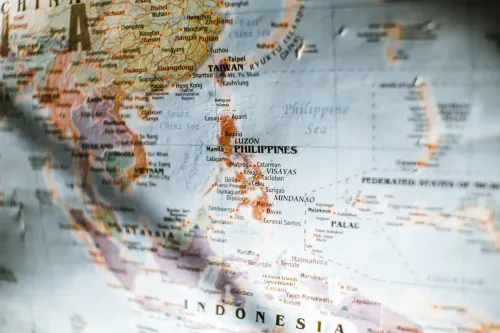
Philippines Geography for Learners: Islands & Language
Philippines geography for Tagalog learners: 7,641 islands, three island groups, and the Southern Luzon heartland where the Tagalog language was born.

Seasons in the Philippines: A Tagalog Guide
The Philippines has two seasons, not four. Learn tag-araw, tag-ulan, and taglamig, the generative tag- prefix, and the weather vocabulary to match.