kumupit
kumupít with stress marks
to pilfer
From root: kupit
Conjugations
Past (Completed)
kumupit
ku-mu-PIT
pilfered
Present (Incomplete)
kumukupit
ku-mu-ku-PIT
is pilfering
Future (Contemplated)
kukupit
ku-ku-PIT
will pilfer
Usage Note
Kumupit is the actor-focus infinitive of kupit, denoting petty, opportunistic theft — pilfering small items or sums rather than serious robbery. It is often used with a wry or humorous tone in everyday speech, though it still carries moral disapproval, and the object-focus partner kupitin shifts attention to the pilfered item.
Examples
" Huwag kang kumupit ng pera. "
Natural Translation
Don't pilfer money.
Literal Translation
Don't you pilfer of money.
" Masamang gawi ang kumupit ng sukli pagkatapos bumili sa palengke. "
Natural Translation
It is a bad habit to pocket loose change after buying at the market.
Literal Translation
Bad habit pocket change after buy market.
" Natanggal sa trabaho ang tindera matapos siyang mahuling kumupit ng barya mula sa kaha araw-araw. "
Natural Translation
The saleslady was dismissed from her job after she was caught pilfering coins from the register every day.
Literal Translation
Removed from work the saleslady after she caught pilfer of coins from the register day-by-day.
Take Tagalog with you
The full course, a 12,500-word dictionary, and flashcards that make every word stick — free to start on iOS and Android.




Tagalog builds thousands of words from a few hundred roots.
How Tagalog words workWord family
kupit has 1 related form built from the same root.
Related Words
Explore Tagalog by topic
Free guides on grammar, vocabulary, and culture to take you past single-word lookups.

Is Tagalog Hard to Learn? An Honest Answer
Tagalog takes around 1,100 hours to reach professional proficiency. Here is what is easy, what is hard, and what to expect at 3, 6, and 12 months.

Mano Po and Filipino Etiquette: A Visitor's Guide
Mano po presses an elder's hand to your forehead as a blessing. Learn who to mano, how to lip-point, and the etiquette that wins over a Filipino family.

Tagalog Question Words: Ano, Sino, Saan & More
Tagalog question words like ano, sino, and saan need the right frame to work. Learn the ang-vs-pronoun rule, confusable pairs, and the ba particle with audio.
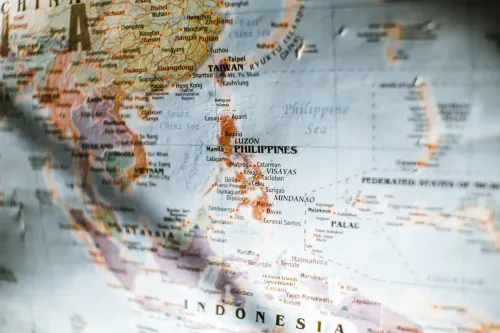
Philippines Geography for Learners: Islands & Language
Philippines geography for Tagalog learners: 7,641 islands, three island groups, and the Southern Luzon heartland where the Tagalog language was born.