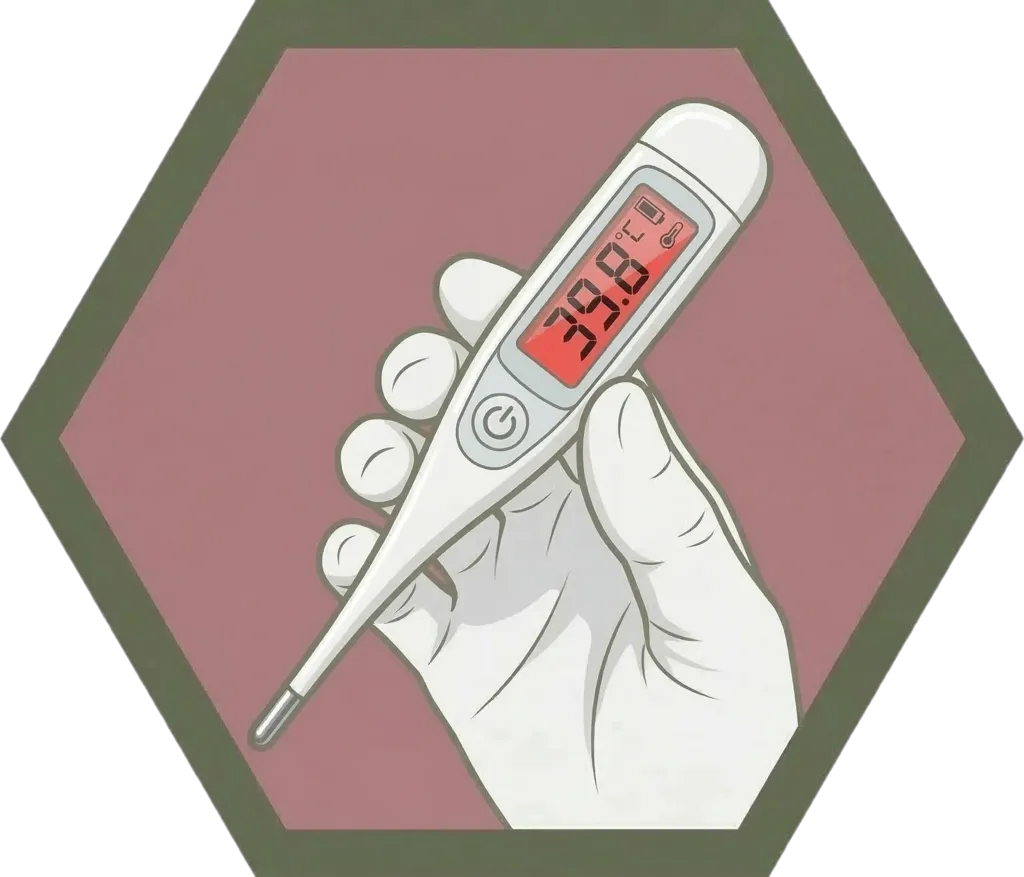
From root: lagnat
Conjugations
Past (Completed)
nagkalagnat
nag-ka-lag-NAT
got a fever
Present (Incomplete)
nagkakalagnat
nag-ka-ka-lag-NAT
getting a fever
Future (Contemplated)
magkakalagnat
mag-ka-ka-lag-NAT
will get a fever
Usage Note
Magkalagnat is used to describe the occurrence or onset of having a fever. It is frequently used in daily health-related conversations or as a warning when someone is exposed to rain or sudden temperature shifts.
Examples
" Baka magkalagnat ang bata. "
Natural Translation
The child might get a fever.
Literal Translation
Maybe get-a-fever the child.
" Madaling magkalagnat kapag palaging nauulanan. "
Natural Translation
It's easy to get a fever when always getting caught in the rain.
Literal Translation
Easy get-a-fever when always getting-rained-on.
" Kung hindi ka magsusuot ng makapal na damit ngayong taglamig, malamang na magkalagnat ka sa loob ng ilang araw. "
Natural Translation
If you don't wear thick clothes this winter, you'll probably get a fever within a few days.
Literal Translation
If not you will-wear of thick clothes this winter, likely that get-a-fever you in inside of few days.
Take Tagalog with you
The full course, a 12,500-word dictionary, and flashcards that make every word stick — free to start on iOS and Android.




Tagalog builds thousands of words from a few hundred roots.
How Tagalog words workWord family
lagnat has 3 related forms built from the same root.
Related Words
Explore Tagalog by topic
Free guides on grammar, vocabulary, and culture to take you past single-word lookups.

Tagalog Word Order: Sentence Structure Made Simple
Why Tagalog puts the verb first, and how ang, ng, and sa markers work. A clear guide to VSO word order, forming questions, and negation.

Magkano: How to Ask "How Much" in Tagalog
Magkano means how much in Tagalog. Learn to ask a price, tell it apart from ilan and gaano, sound polite with po, and haggle at the palengke.

Spaced Repetition for Tagalog: How Flashcards Make Words Stick
Cramming Tagalog vocabulary fails. See how spaced repetition — the science behind smart flashcards — makes words stick for the long term.

Tagalog Greetings: How to Say Hello, Goodbye & Po/Opo
Master Tagalog greetings with pronunciation: kumusta, magandang umaga, po and opo polite forms, time-of-day phrases, and the mano po tradition.