lagnat
lagnát with stress marks
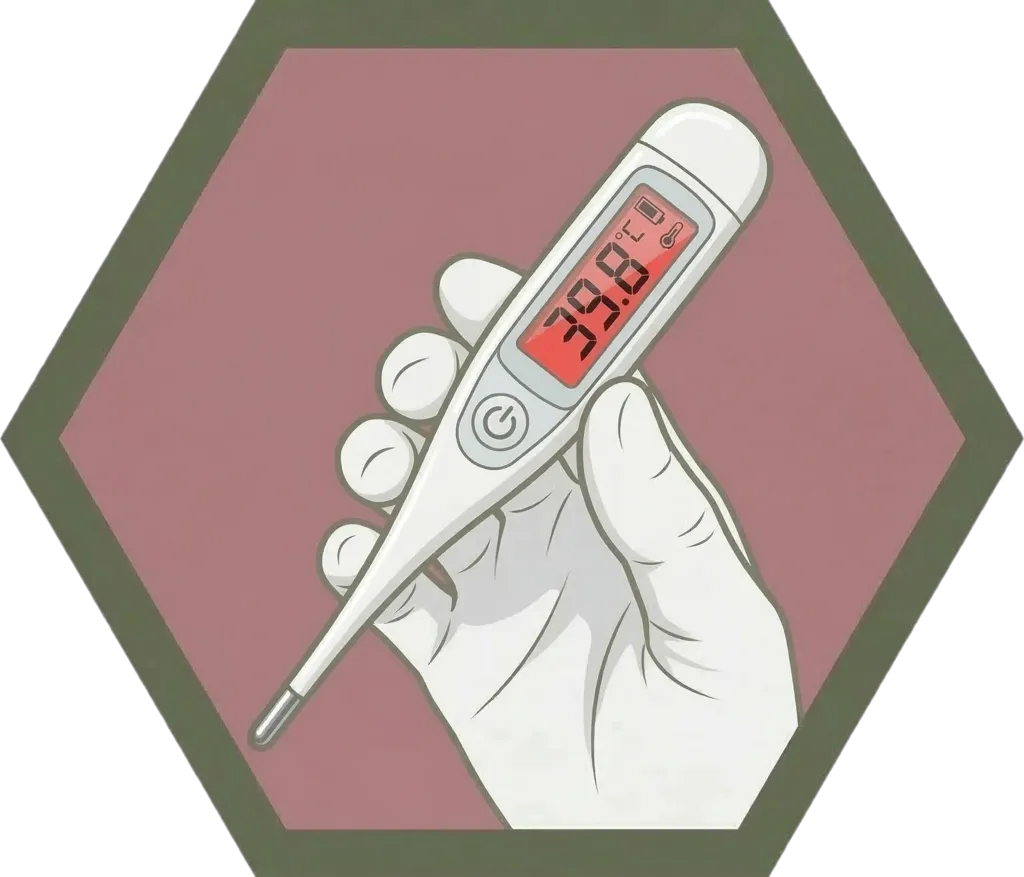
fever
Usage Note
Lagnat is the standard word for fever, but in everyday speech the verb form nilalagnat is more natural for describing someone currently sick — saying nilalagnat ako is the normal way to express having a fever. It is also the more precise term to reach for when temperatura feels too clinical.
Examples
" May lagnat ang bata. "
Natural Translation
The child has a fever.
Literal Translation
Has fever the child.
" May lagnat ako ngayong araw. "
Natural Translation
I have a fever today.
Literal Translation
Has fever I today.
" Hindi siya nakapasok sa trabaho kahapon dahil tumaas nang husto ang kanyang lagnat kinagabihan. "
Natural Translation
She could not go to work yesterday because her fever rose sharply that evening.
Literal Translation
Not she able-to-enter at work yesterday because rose very-much the her fever in-the-evening.
Take Tagalog with you
The full course, a 12,500-word dictionary, and flashcards that make every word stick — free to start on iOS and Android.




Tagalog builds thousands of words from a few hundred roots.
How Tagalog words workActor Focus Verbs
Related Words
Explore Tagalog by topic
Free guides on grammar, vocabulary, and culture to take you past single-word lookups.

Tagalog Time Expressions: Past, Present & Future Guide
Tagalog has no tenses — it uses aspect. Learn time words, days of the week, clock time, and the aspect system, with vocabulary tables and cultural notes.

Seasons in the Philippines: A Tagalog Guide
The Philippines has two seasons, not four. Learn tag-araw, tag-ulan, and taglamig, the generative tag- prefix, and the weather vocabulary to match.

Tagalog Numbers 1-100: Counting, Time & Money Explained
Learn Tagalog numbers 1-100 and beyond. Master both native and Spanish-derived counting systems, plus telling time, reading prices, and ordinals.

Ang, Ng, Sa: The 3 Tagalog Case Markers Explained
Ang, ng, sa are the three Tagalog case markers every noun takes. Learn what each does, the personal forms si/ni/kay, plurals with mga, and clear examples.