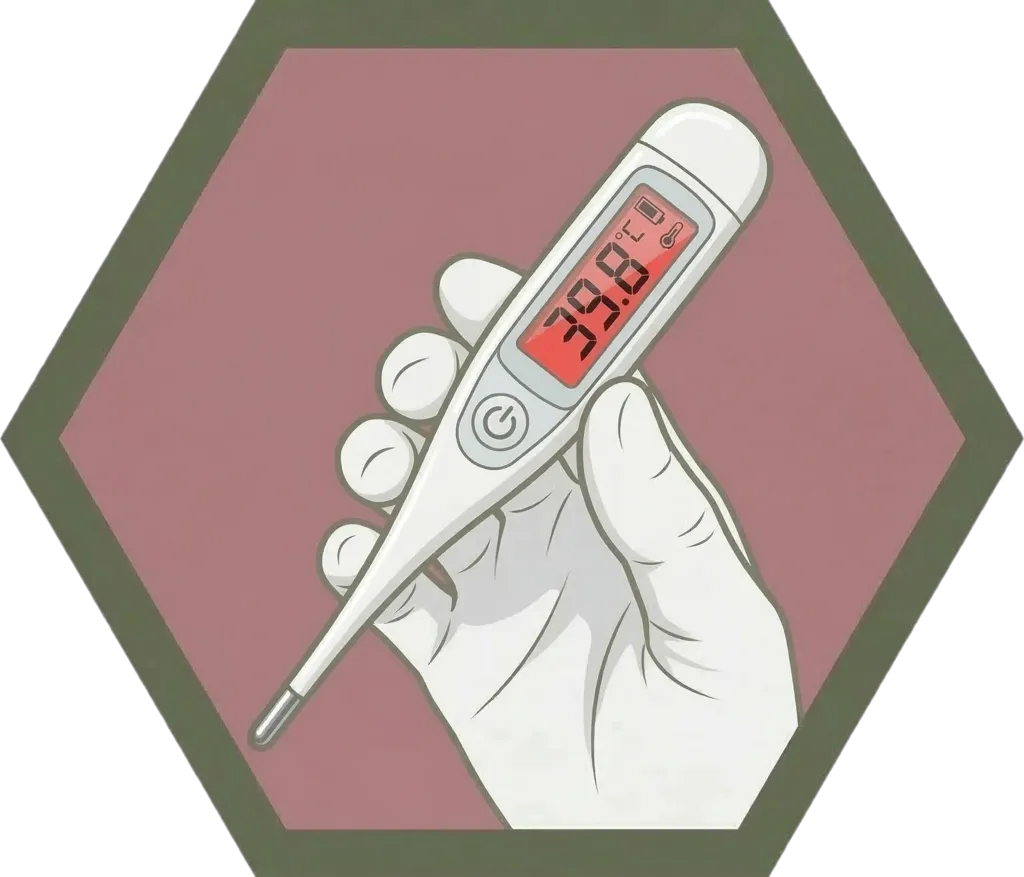
From root: lagnat
Conjugations
Past (Completed)
naglagnat
nag-lag-NAT
had a fever
Present (Incomplete)
naglalagnat
nag-la-lag-NAT
having a fever
Future (Contemplated)
maglalagnat
mag-la-lag-NAT
will have a fever
Usage Note
Maglagnat is used to describe the occurrence or onset of a fever. It is commonly used in everyday conversations when reporting an illness or explaining why someone is unable to attend an event.
Examples
" Baka maglagnat ka mamaya. "
Natural Translation
You might get a fever later.
Literal Translation
Maybe have-a-fever you later.
" Mahirap maglagnat kapag walang kasama. "
Natural Translation
It is hard to have a fever when no one is with you.
Literal Translation
Hard have-a-fever when none companion.
" Madalas siyang maglagnat tuwing tag-ulan kaya laging may handang gamot ang kanyang ina sa bahay. "
Natural Translation
She often comes down with a fever during the rainy season, so her mother always keeps medicine ready at home.
Literal Translation
Often she-that have-a-fever every rainy-season so always has ready medicine the her mother at house.
Take Tagalog with you
The full course, a 12,500-word dictionary, and flashcards that make every word stick — free to start on iOS and Android.




Tagalog builds thousands of words from a few hundred roots.
How Tagalog words workWord family
lagnat has 3 related forms built from the same root.
Related Words
Explore Tagalog by topic
Free guides on grammar, vocabulary, and culture to take you past single-word lookups.

Tagalog Question Words: Ano, Sino, Saan & More
Tagalog question words like ano, sino, and saan need the right frame to work. Learn the ang-vs-pronoun rule, confusable pairs, and the ba particle with audio.

Tagalog Greetings: How to Say Hello, Goodbye & Po/Opo
Master Tagalog greetings with pronunciation: kumusta, magandang umaga, po and opo polite forms, time-of-day phrases, and the mano po tradition.

How to Say Sorry in Tagalog: Patawad vs Pasensya
How to say sorry in Tagalog: patawad, pasensya na, and paumanhin compared on a simple severity-and-formality ladder so you pick the right word every time.

Tagalog Pronouns Explained: Complete Chart with Examples
Every Tagalog pronoun explained with clear charts: ang/ng/sa forms, tayo vs kami, ikaw vs ka, politeness markers, and the mistakes beginners make.