From root: lalang
Conjugations
Past (Completed)
lumalang
lu-ma-LANG
created
Present (Incomplete)
lumalalang
lu-ma-la-LANG
is creating
Future (Contemplated)
lalalang
la-la-LANG
will create
Usage Note
Lumalang is primarily used in formal or religious contexts, specifically referring to the divine act of creation by a deity. For general creation or making things in daily conversation, 'gumawa' or 'lumikha' are more commonly used.
Examples
" Marunong siyang lumalang ng bago. "
Natural Translation
He knows how to create something new.
Literal Translation
Knows he create of new.
" Kaya ng Diyos lumalang ng mundo. "
Natural Translation
God can to create a world.
Literal Translation
Able of God to create of world.
" Naniniwala silang ang Diyos ang lumalang ng langit at lupa noong simula pa lamang ng panahon. "
Natural Translation
They believe that God created the heavens and the earth at the very beginning of time.
Literal Translation
Believe they the God the create of heaven and earth at start only of time.
Take Tagalog with you
The full course, a 12,500-word dictionary, and flashcards that make every word stick — free to start on iOS and Android.




Tagalog builds thousands of words from a few hundred roots.
How Tagalog words workWord family
lalang has 3 related forms built from the same root.
Related Words
Explore Tagalog by topic
Free guides on grammar, vocabulary, and culture to take you past single-word lookups.

Tagalog Verb Focus System Explained (It's Not Active vs. Passive)
The Tagalog verb focus system isn't active vs. passive. Learn actor focus, object focus, and more with clear examples that finally make it click.

How to Say "I Love You" in Tagalog: Phrases & Meaning
Learn how to say I love you in Tagalog. Mahal kita, Iniibig kita, and Filipino terms of endearment for partners, family, and friends — with cultural notes.
Seasons in the Philippines: A Tagalog Guide
The Philippines has two seasons, not four. Learn tag-araw, tag-ulan, and taglamig, the generative tag- prefix, and the weather vocabulary to match.
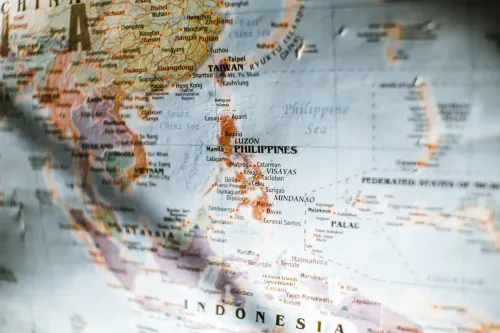
Philippines Geography for Learners: Islands & Language
Philippines geography for Tagalog learners: 7,641 islands, three island groups, and the Southern Luzon heartland where the Tagalog language was born.