maglibot
maglíbot with stress marks
to roam
From root: libot
Conjugations
Past (Completed)
naglibot
nag-LI-bot
roamed
Present (Incomplete)
naglilibot
nag-li-LI-bot
is roaming
Future (Contemplated)
maglilibot
mag-li-LI-bot
will roam
Usage Note
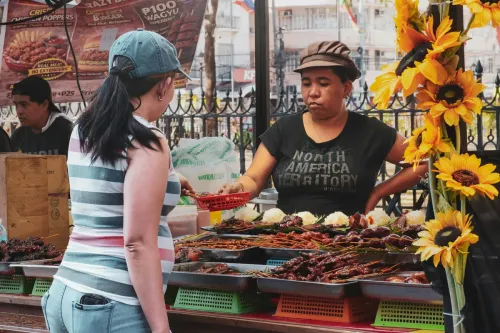
Maglibot is the actor-focus infinitive of libot, commonly describing leisurely exploration of a city, market, or unfamiliar neighborhood with a connotation of wandering without a fixed agenda. The object-focus counterpart libutin foregrounds the place being toured, and the root libot can also function as a noun meaning 'surroundings' or 'vicinity'.
Examples
" Maglibot tayo sa bayan. "
Natural Translation
Let's roam around town.
Literal Translation
Roam we in town.
" Gusto ng pamilya na maglibot sa parke ngayong hapon. "
Natural Translation
The family wants to roam around the park this afternoon.
Literal Translation
Want of family to roam in park this afternoon.
" Tuwing bakasyon, gusto naming maglibot sa mga lumang simbahan at palengke ng probinsiya upang makilala ang kultura. "
Natural Translation
Every vacation, we like to roam around the old churches and markets of the province to get to know the culture.
Literal Translation
Every vacation, want by-us to-roam in the old church and market of province in-order to-know the culture.
Take Tagalog with you
The full course, a 12,500-word dictionary, and flashcards that make every word stick — free to start on iOS and Android.




Tagalog builds thousands of words from a few hundred roots.
How Tagalog words workWord family
libot has 1 related form built from the same root.
Related Words
Explore Tagalog by topic
Free guides on grammar, vocabulary, and culture to take you past single-word lookups.

Tagalog Time Expressions: Past, Present & Future Guide
Tagalog has no tenses — it uses aspect. Learn time words, days of the week, clock time, and the aspect system, with vocabulary tables and cultural notes.
May vs Mayroon vs Meron: Have & There Is
May vs mayroon in Tagalog finally made simple: one rule decides which to use, plus how meron and wala fit the same have and there-is family.

Tagalog Greetings: How to Say Hello, Goodbye & Po/Opo
Master Tagalog greetings with pronunciation: kumusta, magandang umaga, po and opo polite forms, time-of-day phrases, and the mano po tradition.

Tagalog Affixes Explained: A Beginner's Guide to Word Building
Tagalog affixes turn one root word into dozens of meanings. Learn prefixes, infixes, suffixes, and circumfixes with clear examples for beginners.