lisa
lisâ with stress marks
nit (egg of a louse)
Usage Note
Lisa refers to the egg of a head louse, the tiny white nits that attach to hair strands. Removing nits — mangalisa or pagalisan ang buhok — was historically a common social grooming activity among Filipino families, reflecting the value placed on close communal bonds.
Examples
" May lisa sa suklay. "
Natural Translation
There is a nit on the comb.
Literal Translation
Has nit on comb.
" May lisa sa buhok niya. "
Natural Translation
There is a nit in his/her hair.
Literal Translation
Has nit in hair his/her.
" Kapag maraming lisa sa buhok ng bata, mas mahirap nang alisin ang mga kuto kaysa noong bago pa lang. "
Natural Translation
When there are many nits in a child's hair, it becomes harder to remove the lice than when it had just started.
Literal Translation
When many nit in hair of child, more hard already remove the plural louse than when new just only.
Take Tagalog with you
The full course, a 12,500-word dictionary, and flashcards that make every word stick — free to start on iOS and Android.




Tagalog builds thousands of words from a few hundred roots.
How Tagalog words workRelated Words
Explore Tagalog by topic
Free guides on grammar, vocabulary, and culture to take you past single-word lookups.

Seasons in the Philippines: A Tagalog Guide
The Philippines has two seasons, not four. Learn tag-araw, tag-ulan, and taglamig, the generative tag- prefix, and the weather vocabulary to match.
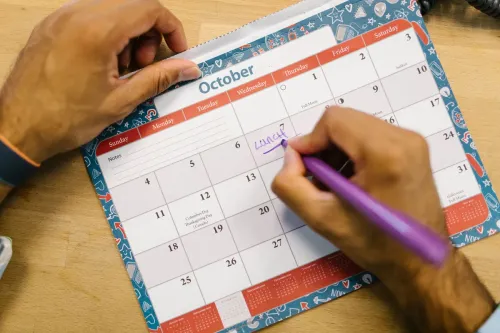
Days of the Week and Months in Tagalog
The days of the week and months in Tagalog are Spanish loanwords. Learn all 7 days and 12 months with pronunciation, plus how to say dates and 'every Monday.'

How to Say Sorry in Tagalog: Patawad vs Pasensya
How to say sorry in Tagalog: patawad, pasensya na, and paumanhin compared on a simple severity-and-formality ladder so you pick the right word every time.

Tagalog vs Filipino: What's the Difference & Which to Learn
Tagalog and Filipino aren't the same language — but they overlap almost completely. Here's the real difference and which one you should actually learn.