From root: lubha
Conjugations
Past (Completed)
lumubha
lu-mub-HA
worsened
Present (Incomplete)
lumulubha
lu-mu-lub-HA
worsening
Future (Contemplated)
lulubha
lu-lub-HA
will worsen
Usage Note
Lumubha is typically used in formal or clinical contexts to describe a situation, condition, or illness that has intensified or become more severe. While similar to 'lumala', it carries a more serious tone and is frequently encountered in news reports or medical discussions.
Examples
" Baka lumubha ang sakit niya. "
Natural Translation
His illness might worsen.
Literal Translation
Maybe worsen the illness his.
" Ayaw kong lumubha ang ubo mo. "
Natural Translation
I don't want your cough to worsen.
Literal Translation
Not-want I worsen the cough your.
" Kung hindi siya magpapatingin sa doktor ngayon, baka lumubha ang kondisyon niya sa mga susunod na araw. "
Natural Translation
If he doesn't see a doctor now, his condition might worsen in the coming days.
Literal Translation
If not he will-be-examined by doctor now, maybe worsen the condition his in the next days.
Take Tagalog with you
The full course, a 12,500-word dictionary, and flashcards that make every word stick — free to start on iOS and Android.




Tagalog builds thousands of words from a few hundred roots.
How Tagalog words workWord family
lubha has 5 related forms built from the same root.
Related Words
Explore Tagalog by topic
Free guides on grammar, vocabulary, and culture to take you past single-word lookups.

Ang, Ng, Sa: The 3 Tagalog Case Markers Explained
Ang, ng, sa are the three Tagalog case markers every noun takes. Learn what each does, the personal forms si/ni/kay, plurals with mga, and clear examples.
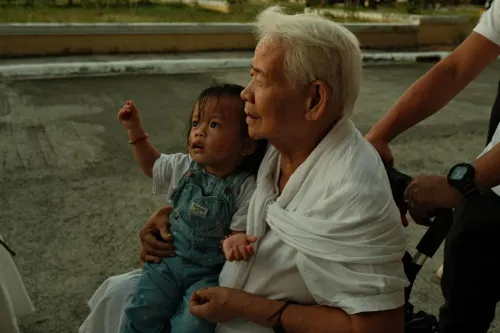
Po and Opo in Tagalog: Where to Put Them Right
Po and opo confuse learners — but placement follows one rule. Where po goes in a sentence, why it's opo not 'oo po', and the pronoun shift to learn.

Tagalog Word Order: Sentence Structure Made Simple
Why Tagalog puts the verb first, and how ang, ng, and sa markers work. A clear guide to VSO word order, forming questions, and negation.
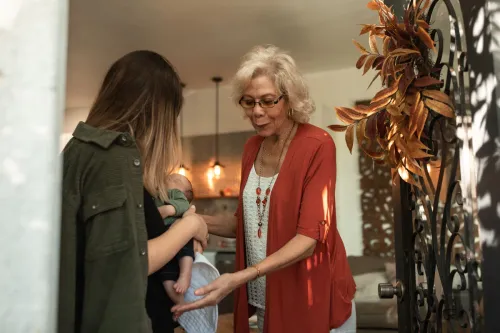
Mano Po and Filipino Etiquette: A Visitor's Guide
Mano po presses an elder's hand to your forehead as a blessing. Learn who to mano, how to lip-point, and the etiquette that wins over a Filipino family.