
From root: mantika
Usage Note
Mamantika uses the ma- prefix on mantika — the standard Filipino word for cooking oil or lard — to describe food that is heavily saturated with oil or fat. It is most commonly applied to fried and sautéed dishes and is used both descriptively and as a mild dietary caution.
Examples
" Mamantika ang pagkain. "
Natural Translation
The food is oily.
Literal Translation
Oily the food.
" Ang pritong manok ay mamantika. "
Natural Translation
The fried chicken is oily.
Literal Translation
The fried chicken is oily.
" Masarap nga ang lechon kawali, ngunit masyadong mamantika kaya hindi ito mabuti sa puso. "
Natural Translation
Crispy fried pork is indeed delicious, but it is too oily so it isn't good for the heart.
Literal Translation
Delicious indeed the fried-pork, but too oily so not it good for heart.
Take Tagalog with you
The full course, a 12,500-word dictionary, and flashcards that make every word stick — free to start on iOS and Android.




Tagalog builds thousands of words from a few hundred roots.
How Tagalog words workWord family
mantika has 4 related forms built from the same root.
Related Words
Explore Tagalog by topic
Free guides on grammar, vocabulary, and culture to take you past single-word lookups.
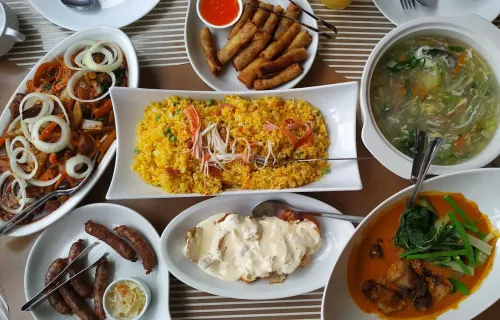
Filipino Food: 12 Essential Dishes (With Tagalog Names)
Filipino food, from adobo to halo-halo: learn the Tagalog names, pronunciations, and ingredients behind 12 dishes you'll want to try on your first trip.

Tagalog Verb Conjugation: Aspects Made Simple
Tagalog verb conjugation uses aspects, not tenses. Learn the three aspects with -um- and mag- verbs, one reduplication rule, and clear example tables.

Tagalog Root Words: Learn a Few Hundred, Understand Thousands
Tagalog root words unlock vocabulary fast: learn a few hundred and recognize thousands. Real word families, examples, and a practical study strategy.

Ang, Ng, Sa: The 3 Tagalog Case Markers Explained
Ang, ng, sa are the three Tagalog case markers every noun takes. Learn what each does, the personal forms si/ni/kay, plurals with mga, and clear examples.