masahihin
masahihín with stress marks
to massage [him/her]
From root: masahe
Conjugations
Past (Completed)
minasahe
mi-na-SA-he
massaged
Present (Incomplete)
minamasahe
mi-na-ma-SA-he
is being massaged
Future (Contemplated)
mamasahihin
ma-ma-sa-hi-HIN
will be massaged
Usage Note
Masahihin is the object-focus infinitive of masahe, an English loanword, used when the person or body part receiving the massage is the grammatical focus. Massage has deep cultural roots in Filipino healthcare and hospitality — traditional healers called manghihilot practice therapeutic hilot as a core healing modality, distinct from the modern spa context. The actor-focus counterpart is magmasahe.
Examples
" Masahihin mo ang likod ko. "
Natural Translation
Massage my back.
Literal Translation
Massage you the back my.
" Nais mo bang masahihin ang aking balikat dahil sa ngawit? "
Natural Translation
Would you care to massage my shoulder because of stiffness?
Literal Translation
Desire you question massage my shoulder because stiffness?
" Hiniling ng lola na masahihin ko ang kanyang mga binti dahil sumakit ang mga ito pagkatapos maglakad nang matagal. "
Natural Translation
Grandma asked me to massage her legs because they hurt after walking for a long time.
Literal Translation
Requested by grandma that massage I the her plural leg because hurt the plural this after to-walk of long-time.
Take Tagalog with you
The full course, a 12,500-word dictionary, and flashcards that make every word stick — free to start on iOS and Android.




Tagalog builds thousands of words from a few hundred roots.
How Tagalog words workWord family
masahe has 1 related form built from the same root.
Related Words
Explore Tagalog by topic
Free guides on grammar, vocabulary, and culture to take you past single-word lookups.
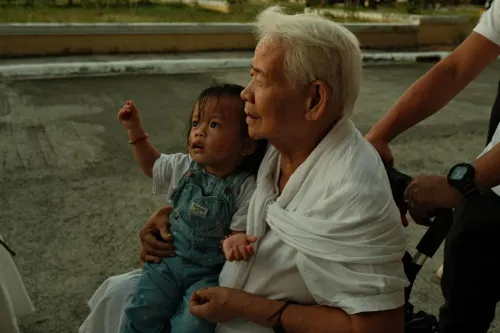
Po and Opo in Tagalog: Where to Put Them Right
Po and opo confuse learners — but placement follows one rule. Where po goes in a sentence, why it's opo not 'oo po', and the pronoun shift to learn.

Tagalog Verb Conjugation: Aspects Made Simple
Tagalog verb conjugation uses aspects, not tenses. Learn the three aspects with -um- and mag- verbs, one reduplication rule, and clear example tables.

Ang, Ng, Sa: The 3 Tagalog Case Markers Explained
Ang, ng, sa are the three Tagalog case markers every noun takes. Learn what each does, the personal forms si/ni/kay, plurals with mga, and clear examples.
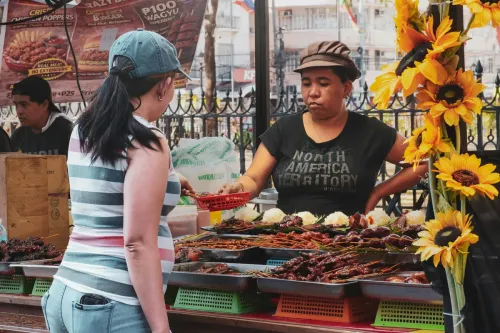
May vs Mayroon vs Meron: Have & There Is
May vs mayroon in Tagalog finally made simple: one rule decides which to use, plus how meron and wala fit the same have and there-is family.