magmotorsiklo
to ride a motorcycle
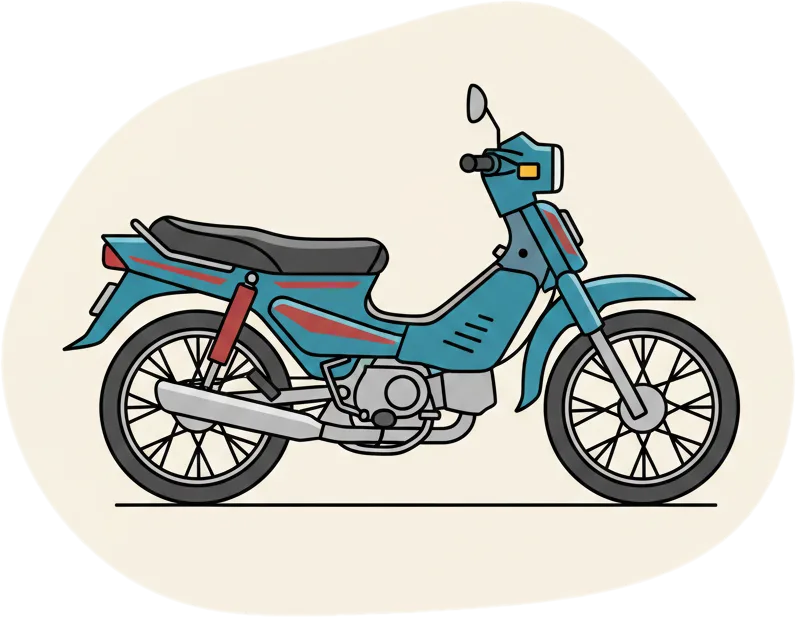
From root: motorsiklo
Conjugations
Past (Completed)
nagmotorsiklo
nag-mo-tor-SI-klo
rode a motorcycle
Present (Incomplete)
nagmomotorsiklo
nag-mo-mo-tor-SI-klo
riding a motorcycle
Future (Contemplated)
magmomotorsiklo
mag-mo-mo-tor-SI-klo
will ride a motorcycle
Usage Note
Magmotorsiklo is used to describe the act of driving or traveling by motorcycle, which is a very common and practical way to navigate through traffic in the Philippines. It typically implies that the subject is the one operating the vehicle for a trip or commute.
Examples
" Marunong na siyang magmotorsiklo. "
Natural Translation
He already knows how to ride a motorcycle.
Literal Translation
Knows already he to-ride-motorcycle.
" Maingat siyang magmotorsiklo. "
Natural Translation
He/she is careful when riding a motorcycle.
Literal Translation
Careful he/she to-ride-motorcycle.
" Mas pinipili niyang magmotorsiklo papuntang trabaho dahil mas mabilis kaysa sumakay ng dyip tuwing umaga. "
Natural Translation
He prefers to ride a motorcycle to work because it is faster than taking a jeep every morning.
Literal Translation
More chooses he to-ride-motorcycle going-to work because more fast than to-ride of jeep every morning.
Take Tagalog with you
The full course, a 12,500-word dictionary, and flashcards that make every word stick — free to start on iOS and Android.




Tagalog builds thousands of words from a few hundred roots.
How Tagalog words workWord family
motorsiklo has 4 related forms built from the same root.
Related Words
Explore Tagalog by topic
Free guides on grammar, vocabulary, and culture to take you past single-word lookups.

Filipino Family Words and Honorifics: Ate, Kuya & Tita
Filipino family words like ate, kuya, tita, tito, lolo, and lola go far beyond family — learn how Filipinos use them with strangers, plus mano po etiquette.

Tagalog Verb Conjugation: Aspects Made Simple
Tagalog verb conjugation uses aspects, not tenses. Learn the three aspects with -um- and mag- verbs, one reduplication rule, and clear example tables.

Languages of the Philippines: Tagalog, Cebuano, and More
Languages of the Philippines: one national language (Filipino) plus 180+ regional languages. Here's who speaks what, where, and why it matters to you.

Tagalog Pronouns Explained: Complete Chart with Examples
Every Tagalog pronoun explained with clear charts: ang/ng/sa forms, tayo vs kami, ikaw vs ka, politeness markers, and the mistakes beginners make.