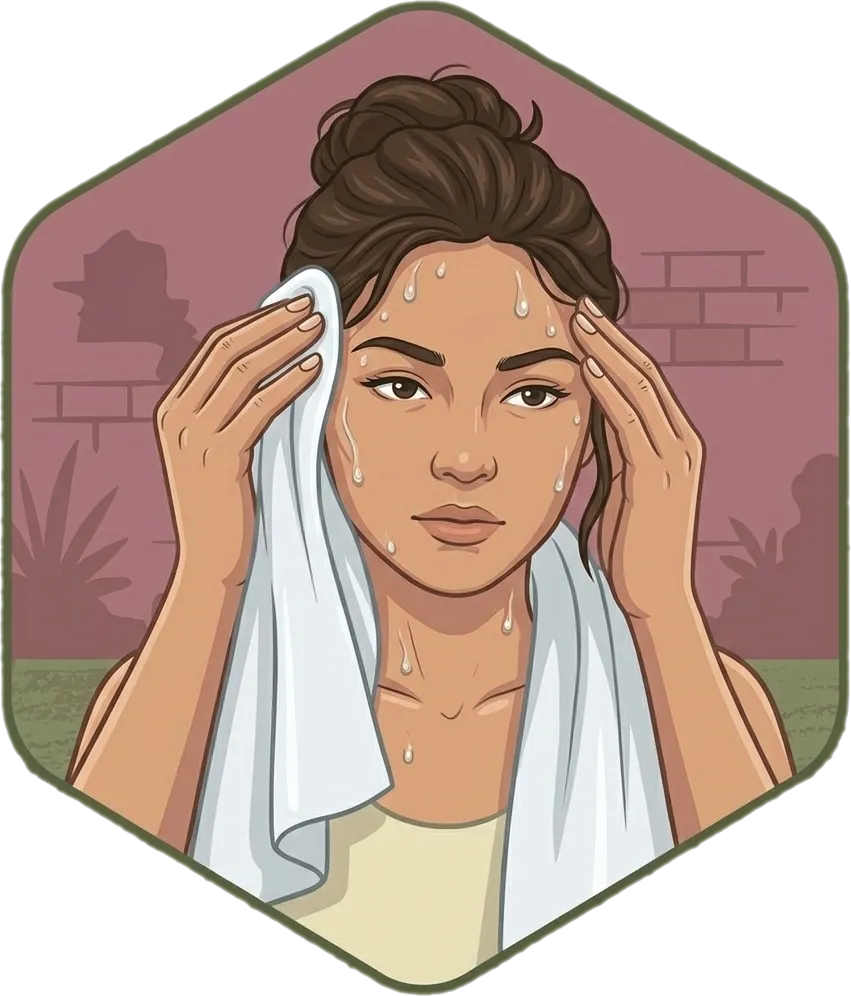
From root: pawis
Usage Note
Pawisan is a stative adjective formed from pawis denoting that a person is currently covered in sweat. It describes an observable physical condition rather than the act of sweating and is common in casual speech after physical exertion, hot weather, or nervousness.
Examples
" Pawisan ako pagkatapos tumakbo. "
Natural Translation
I'm drenched in sweat after running.
Literal Translation
Drenched-in-sweat I after running.
" Pawisan na ang likod ko. "
Natural Translation
My back is already drenched in sweat.
Literal Translation
Drenched-in-sweat already the back my.
" Pawisan na pawisan ang mga manlalaro nang matapos ang laro sa ilalim ng matinding init ng araw. "
Natural Translation
The players were completely drenched in sweat when the game ended under the intense heat of the sun.
Literal Translation
Drenched-in-sweat very-drenched the players when ended the game under of intense heat of sun.
Take Tagalog with you
The full course, a 12,500-word dictionary, and flashcards that make every word stick — free to start on iOS and Android.




Tagalog builds thousands of words from a few hundred roots.
How Tagalog words workWord family
pawis has 7 related forms built from the same root.
Related Words
Explore Tagalog by topic
Free guides on grammar, vocabulary, and culture to take you past single-word lookups.

Tagalog Word Order: Sentence Structure Made Simple
Why Tagalog puts the verb first, and how ang, ng, and sa markers work. A clear guide to VSO word order, forming questions, and negation.

Tagalog Time Expressions: Past, Present & Future Guide
Tagalog has no tenses — it uses aspect. Learn time words, days of the week, clock time, and the aspect system, with vocabulary tables and cultural notes.

Tagalog Numbers 1-100: Counting, Time & Money Explained
Learn Tagalog numbers 1-100 and beyond. Master both native and Spanish-derived counting systems, plus telling time, reading prices, and ordinals.

Na vs -ng in Tagalog: The Linker Rule Made Simple
When do you use na vs -ng in Tagalog? One simple rule, with clear examples, memory tips, and common mistakes explained for English-speaking beginners.