
From root: peke
Usage Note
Pekeng-peke is the intensified form of the root word, used when something is obviously or ridiculously fraudulent. It can be used to mock a low-quality imitation product.
Examples
" Pekeng-peke ang relo na ito. "
Natural Translation
This watch is very fake.
Literal Translation
Very-fake the watch that this.
" Pekeng-peke ang nabili mong bag. "
Natural Translation
The bag you bought is very fake.
Literal Translation
Very-fake the bought you bag.
" Pekeng-peke ang ngiti niya sa harap ng kamera, pero alam ng lahat na galit siya sa loob. "
Natural Translation
Her smile in front of the camera was utterly fake, but everyone knew she was angry inside.
Literal Translation
Very-fake the smile her in front of camera, but knew of all that angry she in inside.
Take Tagalog with you
The full course, a 12,500-word dictionary, and flashcards that make every word stick — free to start on iOS and Android.




Tagalog builds thousands of words from a few hundred roots.
How Tagalog words workWord family
peke has 5 related forms built from the same root.
Related Words
Explore Tagalog by topic
Free guides on grammar, vocabulary, and culture to take you past single-word lookups.

Tagalog Greetings: How to Say Hello, Goodbye & Po/Opo
Master Tagalog greetings with pronunciation: kumusta, magandang umaga, po and opo polite forms, time-of-day phrases, and the mano po tradition.
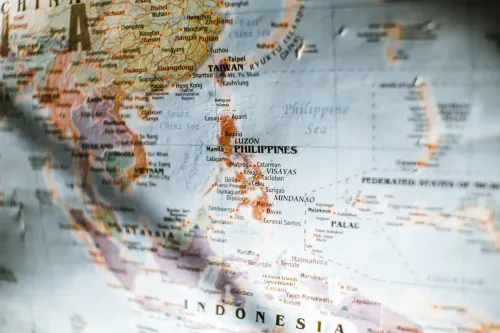
Philippines Geography for Learners: Islands & Language
Philippines geography for Tagalog learners: 7,641 islands, three island groups, and the Southern Luzon heartland where the Tagalog language was born.

Filipino Family Words and Honorifics: Ate, Kuya & Tita
Filipino family words like ate, kuya, tita, tito, lolo, and lola go far beyond family — learn how Filipinos use them with strangers, plus mano po etiquette.

Ang, Ng, Sa: The 3 Tagalog Case Markers Explained
Ang, ng, sa are the three Tagalog case markers every noun takes. Learn what each does, the personal forms si/ni/kay, plurals with mga, and clear examples.