From root: pista
Usage Note
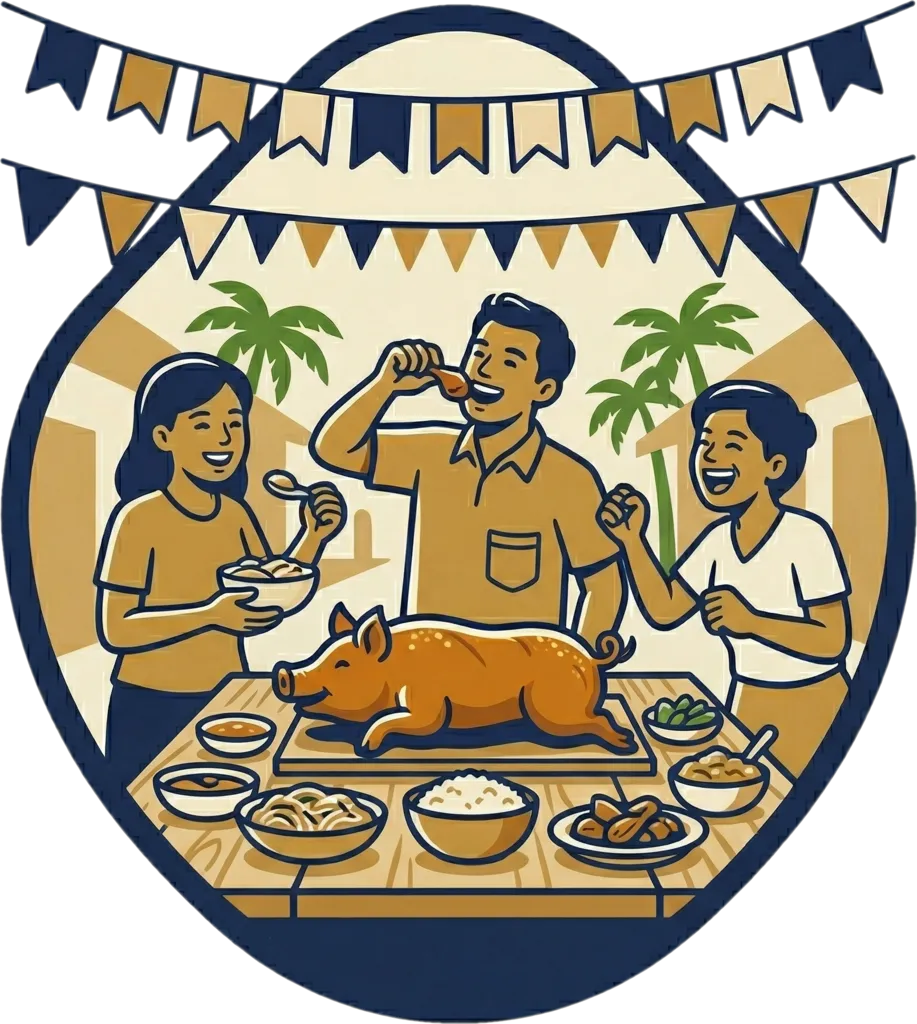
Kapistahan refers to the feast day of a town's or community's patron saint, a deeply embedded tradition in Catholic Filipino culture. These celebrations combine a religious Mass with street fairs, music, and communal feasting, and they remain among the most anticipated local events on the Filipino calendar.
Examples
" Masaya ang kapistahan. "
Natural Translation
The feast day is fun.
Literal Translation
Happy the feast-day.
" Bukas ay kapistahan ng ating bayan. "
Natural Translation
Tomorrow is our town's feast day.
Literal Translation
Tomorrow is feast-day of our town.
" Tuwing kapistahan, bumabalik ang mga taga-Maynila sa probinsya para makasama ang pamilya sa handaan. "
Natural Translation
Every feast day, the Manila folk return to the province to join their family at the banquet.
Literal Translation
Every feast-day, return the people-from-Manila to province to be-with the family at banquet.
Take Tagalog with you
The full course, a 12,500-word dictionary, and flashcards that make every word stick — free to start on iOS and Android.




Tagalog builds thousands of words from a few hundred roots.
How Tagalog words workWord family
pista has 7 related forms built from the same root.
Related Words
Explore Tagalog by topic
Free guides on grammar, vocabulary, and culture to take you past single-word lookups.

Magkano: How to Ask "How Much" in Tagalog
Magkano means how much in Tagalog. Learn to ask a price, tell it apart from ilan and gaano, sound polite with po, and haggle at the palengke.

Languages of the Philippines: Tagalog, Cebuano, and More
Languages of the Philippines: one national language (Filipino) plus 180+ regional languages. Here's who speaks what, where, and why it matters to you.

Tagalog vs Filipino: What's the Difference & Which to Learn
Tagalog and Filipino aren't the same language — but they overlap almost completely. Here's the real difference and which one you should actually learn.

How Long Does It Take to Learn Tagalog?
Survival Tagalog takes ~3-4 weeks and comfortable conversation 6-12 months. FSI's 1,100 hours is the professional bar, not the talking-to-family bar.