
From root: pito
Usage Note
Ikapito is the ika- ordinal prefix on pito (seven), forming the formal ordinal 'seventh' preferred in written and official contexts — the seventh chapter, the seventh of July. Pampito handles more informal ranking uses, though both are broadly in common use and largely interchangeable in everyday speech.
Examples
" Ikapito siya na dumating. "
Natural Translation
He was the seventh to arrive.
Literal Translation
Seventh he that arrived.
" Ikapito na ng umaga. "
Natural Translation
It's already seven in the morning.
Literal Translation
Seventh already of morning.
" Sa ikapito ng Hulyo idaraos ang taunang piyesta ng aming bayan, kaya maaga pa lang ay abala na ang lahat. "
Natural Translation
The annual fiesta of our town will be held on the seventh of July, so everyone is already busy even early on.
Literal Translation
On-the seventh of July will-be-held the annual fiesta of our town, so early only just is busy already the all.
Take Tagalog with you
The full course, a 12,500-word dictionary, and flashcards that make every word stick — free to start on iOS and Android.




Tagalog builds thousands of words from a few hundred roots.
How Tagalog words workWord family
pito has 10 related forms built from the same root.
Related Words
Explore Tagalog by topic
Free guides on grammar, vocabulary, and culture to take you past single-word lookups.
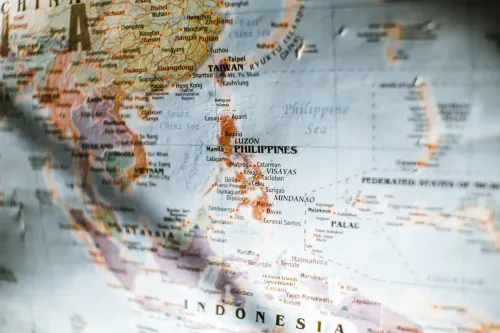
Philippines Geography for Learners: Islands & Language
Philippines geography for Tagalog learners: 7,641 islands, three island groups, and the Southern Luzon heartland where the Tagalog language was born.

Seasons in the Philippines: A Tagalog Guide
The Philippines has two seasons, not four. Learn tag-araw, tag-ulan, and taglamig, the generative tag- prefix, and the weather vocabulary to match.

Tagalog vs Filipino: What's the Difference & Which to Learn
Tagalog and Filipino aren't the same language — but they overlap almost completely. Here's the real difference and which one you should actually learn.

Na vs -ng in Tagalog: The Linker Rule Made Simple
When do you use na vs -ng in Tagalog? One simple rule, with clear examples, memory tips, and common mistakes explained for English-speaking beginners.