From root: punta
Conjugations
Past (Completed)
ipinunta
i-pi-nun-TA
brought something to a place
Present (Incomplete)
ipinupunta
i-pi-nu-pun-TA
is bringing something to a place
Future (Contemplated)
ipupunta
i-pu-pun-TA
will bring something to a place
Usage Note
Ipunta is used when the focus is on the object being taken or moved to a specific destination. It is frequently used in instructions to emphasize where an item should be delivered or placed.
Examples
" Ipunta mo ang bag sa kwarto. "
Natural Translation
Take the bag to the room.
Literal Translation
Bring-to-place you the bag to room.
" Kailangan mong ipunta ang gamit doon. "
Natural Translation
You need to bring the things there.
Literal Translation
Need you bring to-place the things there.
" Pakiusap, ipunta mo ang mga regalo sa bahay ng lola bago magsimula ang handaan mamayang hapon. "
Natural Translation
Please bring the gifts to grandmother's house before the party starts this afternoon.
Literal Translation
Please, bring-to-place you the gifts to house of-the grandma before begin the party later afternoon.
Take Tagalog with you
The full course, a 12,500-word dictionary, and flashcards that make every word stick — free to start on iOS and Android.




Tagalog builds thousands of words from a few hundred roots.
How Tagalog words workWord family
punta has 7 related forms built from the same root.
Related Words
Explore Tagalog by topic
Free guides on grammar, vocabulary, and culture to take you past single-word lookups.

Tagalog vs Filipino: What's the Difference & Which to Learn
Tagalog and Filipino aren't the same language — but they overlap almost completely. Here's the real difference and which one you should actually learn.

Na vs -ng in Tagalog: The Linker Rule Made Simple
When do you use na vs -ng in Tagalog? One simple rule, with clear examples, memory tips, and common mistakes explained for English-speaking beginners.

Tagalog Verb Focus System Explained (It's Not Active vs. Passive)
The Tagalog verb focus system isn't active vs. passive. Learn actor focus, object focus, and more with clear examples that finally make it click.
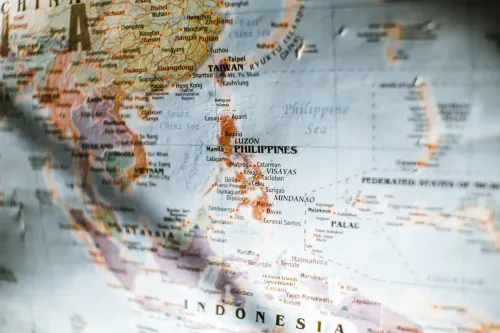
Philippines Geography for Learners: Islands & Language
Philippines geography for Tagalog learners: 7,641 islands, three island groups, and the Southern Luzon heartland where the Tagalog language was born.