
From root: puso
Usage Note
Pusu-puso refers to small heart-shaped ornaments or objects often seen during Valentine's Day or in traditional crafts.
Examples
" May pusu-puso siya. "
Natural Translation
He/She has a heart-shaped object.
Literal Translation
Has heart-shaped-object he/she.
" Ito ay isang pusu-puso. "
Natural Translation
This is a heart-shaped object.
Literal Translation
This is a heart-shaped-object.
" Ginawa niya ang maliliit na pusu-puso mula sa papel upang ipamigay sa kanyang mga kaibigan tuwing Pebrero. "
Natural Translation
She made the little heart-shaped objects out of paper to give away to her friends every February.
Literal Translation
Made she the little heart-shaped-objects from paper to give-away to her friends every February.
Take Tagalog with you
The full course, a 12,500-word dictionary, and flashcards that make every word stick — free to start on iOS and Android.




Tagalog builds thousands of words from a few hundred roots.
How Tagalog words workWord family
puso has 6 related forms built from the same root.
Related Words
Explore Tagalog by topic
Free guides on grammar, vocabulary, and culture to take you past single-word lookups.

Tagalog Verb Focus System Explained (It's Not Active vs. Passive)
The Tagalog verb focus system isn't active vs. passive. Learn actor focus, object focus, and more with clear examples that finally make it click.

How Long Does It Take to Learn Tagalog?
Survival Tagalog takes ~3-4 weeks and comfortable conversation 6-12 months. FSI's 1,100 hours is the professional bar, not the talking-to-family bar.

Tagalog vs Filipino: What's the Difference & Which to Learn
Tagalog and Filipino aren't the same language — but they overlap almost completely. Here's the real difference and which one you should actually learn.
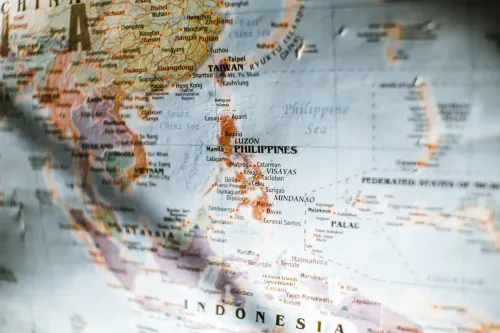
Philippines Geography for Learners: Islands & Language
Philippines geography for Tagalog learners: 7,641 islands, three island groups, and the Southern Luzon heartland where the Tagalog language was born.