
From root: puti
Conjugations
Past (Completed)
ipinuti
i-pi-nu-TI
used something to whiten
Present (Incomplete)
ipinaputi
i-pi-na-pu-TI
is using something to whiten
Future (Contemplated)
ipaputi
i-pa-pu-TI
will use something to whiten
Usage Note
Iputi is used when specifying a particular substance, such as bleach or detergent, as the instrument to make an object white. It is most commonly used in the context of laundry or cleaning to emphasize the specific material used for whitening.
Examples
" Iputi mo ang sabon dito. "
Natural Translation
Use the soap to whiten this.
Literal Translation
Use-to-whiten you the soap here.
" Kailangan nating iputi ito sa damit. "
Natural Translation
We need to use something to whiten this on the shirt.
Literal Translation
Need by-us to-use-to-whiten this on shirt.
" Ang bleach ang dapat mong iputi sa mga puting damit, ngunit huwag mong ilagay sa makukulay. "
Natural Translation
Bleach is what you should use to whiten the white clothes, but don't put it on the colored ones.
Literal Translation
The bleach the should you use-to-whiten on the white clothes, but don't you put on colorful.
Take Tagalog with you
The full course, a 12,500-word dictionary, and flashcards that make every word stick — free to start on iOS and Android.




Tagalog builds thousands of words from a few hundred roots.
How Tagalog words workWord family
puti has 10 related forms built from the same root.
Related Words
Explore Tagalog by topic
Free guides on grammar, vocabulary, and culture to take you past single-word lookups.
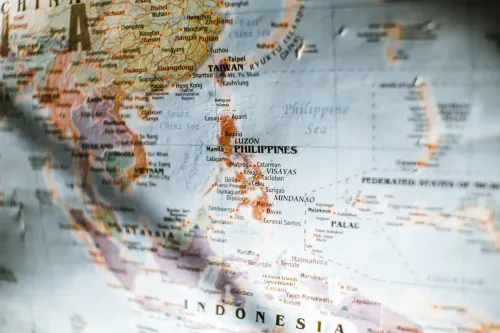
Philippines Geography for Learners: Islands & Language
Philippines geography for Tagalog learners: 7,641 islands, three island groups, and the Southern Luzon heartland where the Tagalog language was born.

Tagalog Pronouns Explained: Complete Chart with Examples
Every Tagalog pronoun explained with clear charts: ang/ng/sa forms, tayo vs kami, ikaw vs ka, politeness markers, and the mistakes beginners make.

Ang, Ng, Sa: The 3 Tagalog Case Markers Explained
Ang, ng, sa are the three Tagalog case markers every noun takes. Learn what each does, the personal forms si/ni/kay, plurals with mga, and clear examples.

Tagalog Verb Conjugation: Aspects Made Simple
Tagalog verb conjugation uses aspects, not tenses. Learn the three aspects with -um- and mag- verbs, one reduplication rule, and clear example tables.