raspa
ráspa with stress marks
rasp; scrape; abortion (colloq)
Usage Note
Raspa comes from Spanish 'raspar' and in its literal sense means to scrape or rasp a surface. Colloquially and in medical slang it refers to a dilation and curettage procedure or abortion — a sensitive, context-dependent usage that learners should handle carefully.
Examples
" Ginamit niya ang raspa. "
Natural Translation
He used the rasp.
Literal Translation
Used he the rasp.
" Ginamit ng karpintero ang raspa para pantayin ang kahoy. "
Natural Translation
The carpenter used a rasp to smooth out the wood.
Literal Translation
Used the carpenter the rasp to smooth the wood.
" Matapos magkabit ng pinto, kinuha ng karpintero ang raspa upang alisin ang mga magaspang na bahagi ng kahoy bago ito pinturahan. "
Natural Translation
After installing the door, the carpenter took the rasp to remove the rough parts of the wood before painting it.
Literal Translation
After install of door, took by the carpenter the rasp to remove the plural rough that part of wood before it painted.
Take Tagalog with you
The full course, a 12,500-word dictionary, and flashcards that make every word stick — free to start on iOS and Android.




Tagalog builds thousands of words from a few hundred roots.
How Tagalog words workActor Focus Verbs
Object Focus Verbs
Related Words
Explore Tagalog by topic
Free guides on grammar, vocabulary, and culture to take you past single-word lookups.

Languages of the Philippines: Tagalog, Cebuano, and More
Languages of the Philippines: one national language (Filipino) plus 180+ regional languages. Here's who speaks what, where, and why it matters to you.
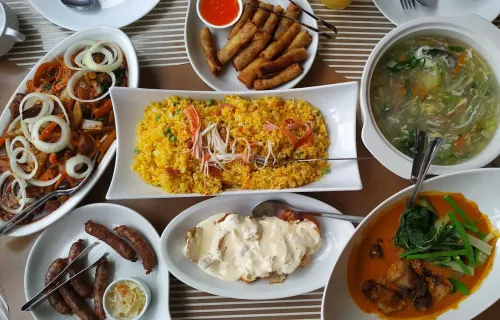
Filipino Food: 12 Essential Dishes (With Tagalog Names)
Filipino food, from adobo to halo-halo: learn the Tagalog names, pronunciations, and ingredients behind 12 dishes you'll want to try on your first trip.

How Long Does It Take to Learn Tagalog?
Survival Tagalog takes ~3-4 weeks and comfortable conversation 6-12 months. FSI's 1,100 hours is the professional bar, not the talking-to-family bar.

Tagalog Greetings: How to Say Hello, Goodbye & Po/Opo
Master Tagalog greetings with pronunciation: kumusta, magandang umaga, po and opo polite forms, time-of-day phrases, and the mano po tradition.