
From root: sakit
Conjugations
Past (Completed)
nagkasakit
nag-ka-sa-KIT
got sick
Present (Incomplete)
nagkakasakit
nag-ka-ka-sa-KIT
getting sick
Future (Contemplated)
magkakasakit
mag-ka-ka-sa-KIT
will get sick
Usage Note
Magkasakit is used to describe the involuntary act of falling ill or contracting a disease. It is frequently used in daily conversation when discussing health concerns or giving advice to prevent illness.
Examples
" Ayaw kong magkasakit. "
Natural Translation
I don't want to get sick.
Literal Translation
Don't-want I to-get-sick.
" Ayaw kong magkasakit ngayong linggo. "
Natural Translation
I don't want to get sick this week.
Literal Translation
Don't want I to-get-sick this week.
" Madalas siyang magkasakit tuwing tag-ulan kaya nagdadala lagi siya ng payong at gamot. "
Natural Translation
He often gets sick during the rainy season, so he always carries an umbrella and medicine.
Literal Translation
Often he to-get-sick every rainy-season so carrying always he of umbrella and medicine.
Take Tagalog with you
The full course, a 12,500-word dictionary, and flashcards that make every word stick — free to start on iOS and Android.




Tagalog builds thousands of words from a few hundred roots.
How Tagalog words workWord family
sakit has 8 related forms built from the same root.
Related Words
Explore Tagalog by topic
Free guides on grammar, vocabulary, and culture to take you past single-word lookups.

Ng vs Nang in Tagalog: The Spelling Rule
Ng vs nang sound identical but spell differently. Use ng to mark nouns (of, the object), and nang for how, when, repetition, and counting time.
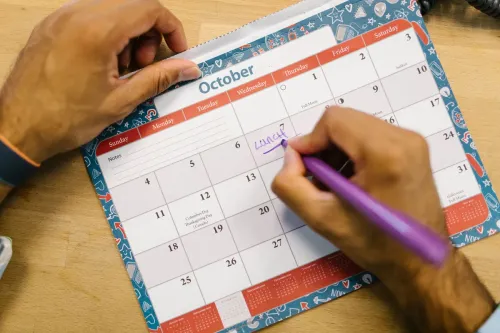
Days of the Week and Months in Tagalog
The days of the week and months in Tagalog are Spanish loanwords. Learn all 7 days and 12 months with pronunciation, plus how to say dates and 'every Monday.'

Tagalog Slang Guide: 20 Words You'll Hear on TikTok
Tagalog slang explained: lodi, petmalu, werpa, astig, chika and more. Decode Filipino TikTok comments, group chats, and pop culture with this practical guide.

Po and Opo in Tagalog: Where to Put Them Right
Po and opo confuse learners — but placement follows one rule. Where po goes in a sentence, why it's opo not 'oo po', and the pronoun shift to learn.