salak
salák with stress marks
to cut firewood
Also means
Salak can also refer to flood-borne grasses and debris when used as a noun with different stress.
Usage Note
Salak in this verbal sense means to chop or cut wood for fuel, a daily chore in many rural Philippine households where wood-burning stoves are still common. The word is most at home in provincial and mountainous regions.
Examples
" Sumasalak siya ng kahoy. "
Natural Translation
He is chopping firewood.
Literal Translation
Chopping-firewood he of wood.
" Kailangan natin salak ang kahoy. "
Natural Translation
We need to cut firewood.
Literal Translation
Needed we cut-firewood the wood.
" Maaga pang sumasalak ng kahoy ang lolo ko sa bundok bago pa magluto ng almusal ang lola. "
Natural Translation
My grandfather chops firewood up in the mountain early in the morning, even before grandmother cooks breakfast.
Literal Translation
Early still chopping-firewood of wood the grandfather my in mountain before still cook of breakfast the grandmother.
Take Tagalog with you
The full course, a 12,500-word dictionary, and flashcards that make every word stick — free to start on iOS and Android.




Tagalog builds thousands of words from a few hundred roots.
How Tagalog words workActor Focus Verbs
Related Words
Explore Tagalog by topic
Free guides on grammar, vocabulary, and culture to take you past single-word lookups.

Tagalog Word Order: Sentence Structure Made Simple
Why Tagalog puts the verb first, and how ang, ng, and sa markers work. A clear guide to VSO word order, forming questions, and negation.

Magkano: How to Ask "How Much" in Tagalog
Magkano means how much in Tagalog. Learn to ask a price, tell it apart from ilan and gaano, sound polite with po, and haggle at the palengke.

Ang, Ng, Sa: The 3 Tagalog Case Markers Explained
Ang, ng, sa are the three Tagalog case markers every noun takes. Learn what each does, the personal forms si/ni/kay, plurals with mga, and clear examples.
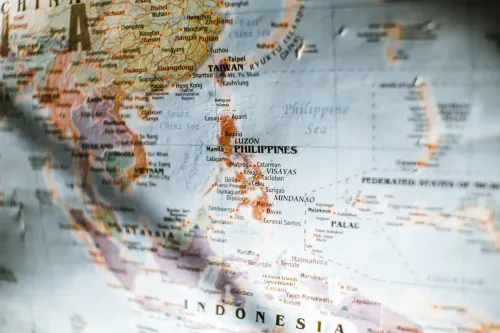
Philippines Geography for Learners: Islands & Language
Philippines geography for Tagalog learners: 7,641 islands, three island groups, and the Southern Luzon heartland where the Tagalog language was born.