tahakin
tahakín with stress marks
to traverse [it]
From root: tahak
Conjugations
Past (Completed)
tinahak
ti-na-HAK
traversed
Present (Incomplete)
tinatahak
ti-na-ta-HAK
is being traversed
Future (Contemplated)
tatahakin
ta-ta-ha-KIN
will be traversed
Usage Note
Tahakin is the object-focus form of tahak, used when the path, terrain, or course being traversed is the grammatical focus. The root tahak evokes deliberate passage through unfamiliar ground, and the form appears often in motivational speech — urging someone to forge their own trail.
Examples
" Mahirap tahakin ang baku-bakong daan. "
Natural Translation
It is hard to traverse the bumpy road.
Literal Translation
Difficult to-traverse the bumpy road.
" Mahirap tahakin ang madilim na eskinita kapag gabi. "
Natural Translation
It is difficult to traverse the dark alley at night.
Literal Translation
Difficult to-traverse the dark alley when night.
" Kailangan mong tahakin ang sarili mong landas kahit ibang direksyon ang gustong ituro ng mga magulang mo. "
Natural Translation
You need to forge your own path even if your parents want to point you in a different direction.
Literal Translation
Need you to-traverse the own your path even-if different direction the want to-point by (plural) parent your.
Take Tagalog with you
The full course, a 12,500-word dictionary, and flashcards that make every word stick — free to start on iOS and Android.




Tagalog builds thousands of words from a few hundred roots.
How Tagalog words workWord family
tahak has 1 related form built from the same root.
Related Words
Explore Tagalog by topic
Free guides on grammar, vocabulary, and culture to take you past single-word lookups.

Tagalog Word Order: Sentence Structure Made Simple
Why Tagalog puts the verb first, and how ang, ng, and sa markers work. A clear guide to VSO word order, forming questions, and negation.

Languages of the Philippines: Tagalog, Cebuano, and More
Languages of the Philippines: one national language (Filipino) plus 180+ regional languages. Here's who speaks what, where, and why it matters to you.
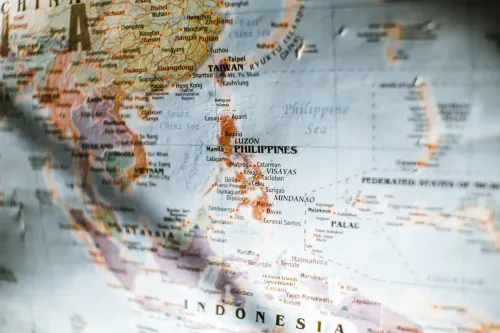
Philippines Geography for Learners: Islands & Language
Philippines geography for Tagalog learners: 7,641 islands, three island groups, and the Southern Luzon heartland where the Tagalog language was born.

Tagalog Time Expressions: Past, Present & Future Guide
Tagalog has no tenses — it uses aspect. Learn time words, days of the week, clock time, and the aspect system, with vocabulary tables and cultural notes.