tantiyahin
tantiyahín with stress marks
to estimate [it]
From root: tantiya
Conjugations
Past (Completed)
tinantiya
ti-nan-ti-YA
estimated
Present (Incomplete)
tinatantiya
ti-na-tan-ti-YA
is being estimated
Future (Contemplated)
tatantiyahin
ta-tan-ti-ya-HIN
will be estimated
Usage Note
Tantiyahin is the object-focus infinitive of tantiya, used when the quantity, cost, or dimension being estimated is the grammatical focus. It appears in market bargaining, construction planning, and budgeting contexts, sharing the pragmatic, down-to-earth register of its actor-focus counterpart magtantiya.
Examples
" Tantiyahin mo ang presyo. "
Natural Translation
Estimate the price.
Literal Translation
Estimate you the price.
" Subukan mong tantiyahin ang layo ng bundok mula rito. "
Natural Translation
Try to estimate the distance of the mountain from here.
Literal Translation
Try you to-estimate the distance of mountain from here.
" Bago tayo magpasimula ng konstruksiyon, kailangan munang tantiyahin ng inhinyero ang dami ng semento at bakal na gagamitin. "
Natural Translation
Before we begin construction, the engineer must first estimate the amount of cement and steel to be used.
Literal Translation
Before we to-begin of construction, need first to-estimate by engineer the amount of cement and steel to-be-used.
Take Tagalog with you
The full course, a 12,500-word dictionary, and flashcards that make every word stick — free to start on iOS and Android.




Tagalog builds thousands of words from a few hundred roots.
How Tagalog words workWord family
tantiya has 1 related form built from the same root.
Related Words
Explore Tagalog by topic
Free guides on grammar, vocabulary, and culture to take you past single-word lookups.

Filipino Food: 12 Essential Dishes (With Tagalog Names)
Filipino food, from adobo to halo-halo: learn the Tagalog names, pronunciations, and ingredients behind 12 dishes you'll want to try on your first trip.

Tagalog Root Words: Learn a Few Hundred, Understand Thousands
Tagalog root words unlock vocabulary fast: learn a few hundred and recognize thousands. Real word families, examples, and a practical study strategy.

Ng vs Nang in Tagalog: The Spelling Rule
Ng vs nang sound identical but spell differently. Use ng to mark nouns (of, the object), and nang for how, when, repetition, and counting time.
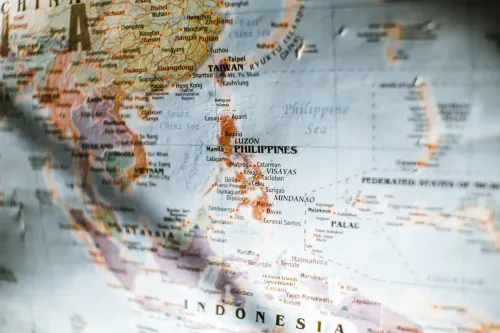
Philippines Geography for Learners: Islands & Language
Philippines geography for Tagalog learners: 7,641 islands, three island groups, and the Southern Luzon heartland where the Tagalog language was born.