tiwangwang
tiwangwáng with stress marks
widely open; exposed; uncultivated land
Usage Note
Tiwangwang evokes vast, open, and often desolate spaces — a wide field, an open wound, or an exposed hillside. It has a poetic quality and appears in literary writing to convey vulnerability or abandonment as much as physical openness.
Examples
" Tiwangwang ang bukid. "
Natural Translation
The field is wide open.
Literal Translation
Wide-open the field.
" Tiwangwang ang lupa sa probinsya. "
Natural Translation
The land in the province is widely open.
Literal Translation
Widely open the land in province.
" Tiwangwang ang buong kapatagan na walang punong makakasilong kaya nakakapaso ang init ng araw sa tanghali. "
Natural Translation
The whole plain lay wide open with no tree for shade, so the heat of the sun at noon was scorching.
Literal Translation
Wide-open the whole plain that no tree can-shelter so scorching the heat of sun at noon.
Take Tagalog with you
The full course, a 12,500-word dictionary, and flashcards that make every word stick — free to start on iOS and Android.




Tagalog builds thousands of words from a few hundred roots.
How Tagalog words workRelated Words
Explore Tagalog by topic
Free guides on grammar, vocabulary, and culture to take you past single-word lookups.

Tagalog Affixes Explained: A Beginner's Guide to Word Building
Tagalog affixes turn one root word into dozens of meanings. Learn prefixes, infixes, suffixes, and circumfixes with clear examples for beginners.

Tagalog Time Expressions: Past, Present & Future Guide
Tagalog has no tenses — it uses aspect. Learn time words, days of the week, clock time, and the aspect system, with vocabulary tables and cultural notes.
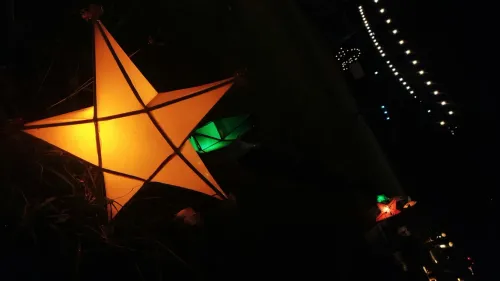
Philippine Christmas Traditions: World's Longest Holiday
Philippine Christmas traditions run four months — from Ber-month carols to Simbang Gabi dawn masses, Noche Buena feasts, and parol lanterns lighting every street.

Magkano: How to Ask "How Much" in Tagalog
Magkano means how much in Tagalog. Learn to ask a price, tell it apart from ilan and gaano, sound polite with po, and haggle at the palengke.