mauna
maúna with stress marks
to go first; to go ahead
From root: una
Conjugations
Past (Completed)
nauna
na-U-na
went first
Present (Incomplete)
nauuna
na-u-U-na
is going first
Future (Contemplated)
mauuna
ma-u-U-na
will go first
Usage Note
Mauna is the actor-focus ma- form of una: the one who goes, arrives, or acts ahead of the others takes ang. Mauna na ako ('I'll go ahead') is the standard polite way to take one's leave before others, and Mauna ka na invites someone to go first.
Examples
" Mauna na ako. "
Natural Translation
I'll go ahead.
Literal Translation
Go-first now I.
" Mauna ka nang kumain, susunod na lang ako. "
Natural Translation
Go ahead and eat first, I'll just follow.
Literal Translation
Go-first you already-link to-eat, will-follow just only I.
" Nauna kaming dumating sa terminal kaya nakapili pa kami ng magandang upuan sa bus. "
Natural Translation
We arrived at the terminal first, so we still got to choose good seats on the bus.
Literal Translation
Went-first we-link arrive at terminal so were-able-to-choose still we of nice-link seat on bus.
Take Tagalog with you
The full course, a 12,500-word dictionary, and flashcards that make every word stick — free to start on iOS and Android.


Tagalog builds thousands of words from a few hundred roots.
How Tagalog words workWord family
una has 9 related forms built from the same root.
Related Words
Explore Tagalog by topic
Free guides on grammar, vocabulary, and culture to take you past single-word lookups.

Tagalog Affixes Explained: A Beginner's Guide to Word Building
Tagalog affixes turn one root word into dozens of meanings. Learn prefixes, infixes, suffixes, and circumfixes with clear examples for beginners.
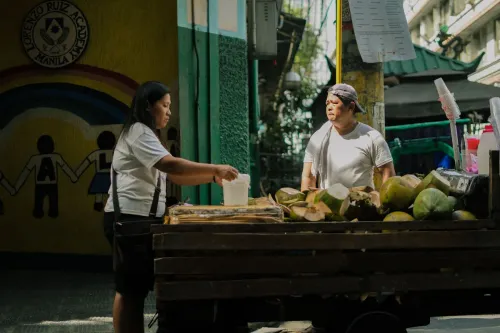
Magkano: How to Ask "How Much" in Tagalog
Magkano means how much in Tagalog. Learn to ask a price, tell it apart from ilan and gaano, sound polite with po, and haggle at the palengke.
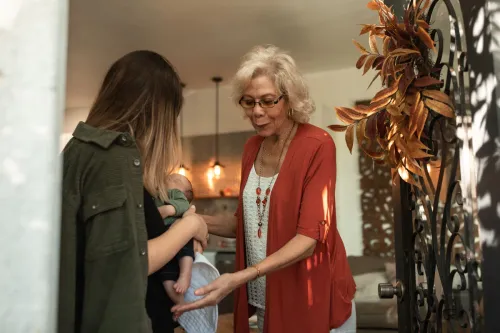
Mano Po and Filipino Etiquette: A Visitor's Guide
Mano po presses an elder's hand to your forehead as a blessing. Learn who to mano, how to lip-point, and the etiquette that wins over a Filipino family.

Tagalog Greetings: How to Say Hello, Goodbye & Po/Opo
Master Tagalog greetings with pronunciation: kumusta, magandang umaga, po and opo polite forms, time-of-day phrases, and the mano po tradition.