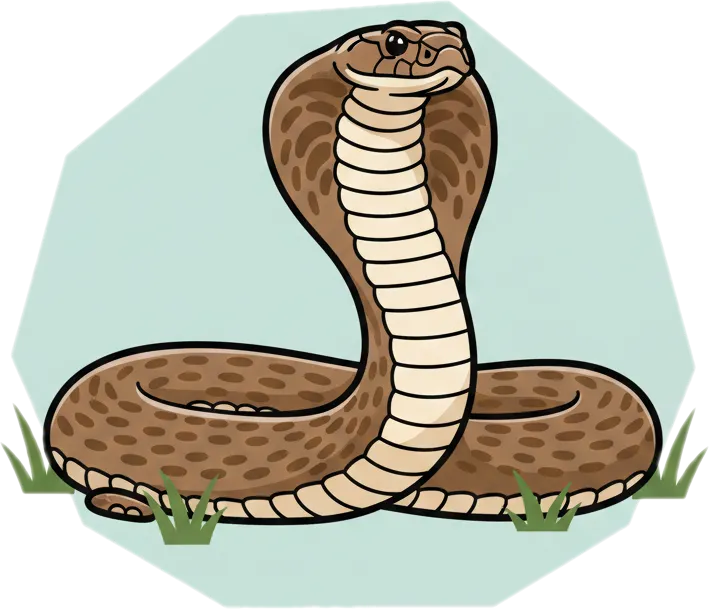
From root: ahas
Usage Note
Maahas describes a location or area known for having many snakes. It serves as a warning for people to be careful when walking through long grass or thick forests.
Examples
" Maahas ang damuhan dito. "
Natural Translation
The grassy area here is snake-infested.
Literal Translation
Snake-infested the grassland here.
" Maahas sa lugar na iyon kaya mag-ingat kayo. "
Natural Translation
That place is snake-infested so be careful.
Literal Translation
Snake-infested in place that so be-careful you.
" Ayon sa mga magsasaka, maahas ang gilid ng sapa kaya hindi sila dumaraan doon kapag gabi na. "
Natural Translation
According to the farmers, the edge of the creek is snake-infested, so they do not pass through there once it is night.
Literal Translation
According to-the farmers, snake-infested the edge of-the creek so not they passing there when night already.
Take Tagalog with you
The full course, a 12,500-word dictionary, and flashcards that make every word stick — free to start on iOS and Android.




Tagalog builds thousands of words from a few hundred roots.
How Tagalog words workWord family
ahas has 5 related forms built from the same root.
Related Words
Explore Tagalog by topic
Free guides on grammar, vocabulary, and culture to take you past single-word lookups.

Tagalog Time Expressions: Past, Present & Future Guide
Tagalog has no tenses — it uses aspect. Learn time words, days of the week, clock time, and the aspect system, with vocabulary tables and cultural notes.

Tagalog Greetings: How to Say Hello, Goodbye & Po/Opo
Master Tagalog greetings with pronunciation: kumusta, magandang umaga, po and opo polite forms, time-of-day phrases, and the mano po tradition.

Tagalog Verb Conjugation: Aspects Made Simple
Tagalog verb conjugation uses aspects, not tenses. Learn the three aspects with -um- and mag- verbs, one reduplication rule, and clear example tables.

May vs Mayroon vs Meron: Have & There Is
May vs mayroon in Tagalog finally made simple: one rule decides which to use, plus how meron and wala fit the same have and there-is family.