amnestiya
amnestíya with stress marks
amnesty
Usage Note
Amnestiya is a legal and political term borrowed from English via Spanish, used when governments pardon groups for past offenses — often rebels or political prisoners. It appears frequently in Philippine news coverage of peace negotiations with communist insurgent groups and Moro separatist factions, and is rarely used in casual conversation.
Examples
" Binigyan sila ng amnestiya. "
Natural Translation
They were given amnesty.
Literal Translation
Given they of amnesty.
" Ibinigay ng gobyerno ang amnestiya sa mga dating rebelde na sumuko. "
Natural Translation
The government granted amnesty to the former rebels who surrendered.
Literal Translation
Gave the government the amnesty to-the the former rebels who surrendered.
" Bahagi ng kasunduang pangkapayapaan ang amnestiya na ibibigay sa mga rebelde na nagnais nang bumalik sa lipunan. "
Natural Translation
Part of the peace agreement is the amnesty to be granted to the rebels who wished to return to society.
Literal Translation
Part of-the agreement peace the amnesty that will-be-given to-the rebels who wished already to-return to society.
Take Tagalog with you
The full course, a 12,500-word dictionary, and flashcards that make every word stick — free to start on iOS and Android.




Tagalog builds thousands of words from a few hundred roots.
How Tagalog words workRelated Words
Explore Tagalog by topic
Free guides on grammar, vocabulary, and culture to take you past single-word lookups.
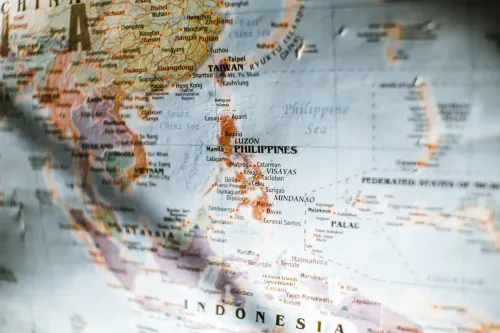
Philippines Geography for Learners: Islands & Language
Philippines geography for Tagalog learners: 7,641 islands, three island groups, and the Southern Luzon heartland where the Tagalog language was born.

Na vs -ng in Tagalog: The Linker Rule Made Simple
When do you use na vs -ng in Tagalog? One simple rule, with clear examples, memory tips, and common mistakes explained for English-speaking beginners.

Is Tagalog Hard to Learn? An Honest Answer
Tagalog takes around 1,100 hours to reach professional proficiency. Here is what is easy, what is hard, and what to expect at 3, 6, and 12 months.

Tagalog Word Order: Sentence Structure Made Simple
Why Tagalog puts the verb first, and how ang, ng, and sa markers work. A clear guide to VSO word order, forming questions, and negation.