amo
ámo with stress marks
boss; master; employer

Also means
Amo can also mean tame.
Usage Note
Amo is commonly used to refer to an employer or the head of a household, especially within domestic service or labor contexts. It highlights a hierarchical relationship and is also the standard word used for a pet's owner.
Examples
" Wala ang amo ngayon. "
Natural Translation
The boss is not here today.
Literal Translation
Absent the boss now.
" Ang amo ko ay mabait. "
Natural Translation
My boss is kind.
Literal Translation
The boss I is kind.
" Kahit mahigpit ang amo namin, alam naming patas siya sa lahat ng empleyado. "
Natural Translation
Even though our boss is strict, we know he is fair to all the employees.
Literal Translation
Even-if strict the boss our, know we fair he to all of employees.
Take Tagalog with you
The full course, a 12,500-word dictionary, and flashcards that make every word stick — free to start on iOS and Android.




Tagalog builds thousands of words from a few hundred roots.
How Tagalog words workDerived Words
Actor Focus Verbs
Object Focus Verbs
Related Words
Explore Tagalog by topic
Free guides on grammar, vocabulary, and culture to take you past single-word lookups.
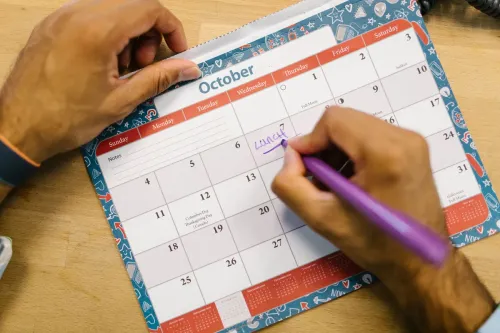
Days of the Week and Months in Tagalog
The days of the week and months in Tagalog are Spanish loanwords. Learn all 7 days and 12 months with pronunciation, plus how to say dates and 'every Monday.'

Tagalog Time Expressions: Past, Present & Future Guide
Tagalog has no tenses — it uses aspect. Learn time words, days of the week, clock time, and the aspect system, with vocabulary tables and cultural notes.

Magkano: How to Ask "How Much" in Tagalog
Magkano means how much in Tagalog. Learn to ask a price, tell it apart from ilan and gaano, sound polite with po, and haggle at the palengke.

May vs Mayroon vs Meron: Have & There Is
May vs mayroon in Tagalog finally made simple: one rule decides which to use, plus how meron and wala fit the same have and there-is family.