From root: amo
Usage Note
Pag-amo refers to the act of pacifying someone's anger or calming a wild animal. It is often used in the context of soothing an upset child or partner.
Examples
" Madali ang pag-amo sa pusa. "
Natural Translation
Taming the cat was easy.
Literal Translation
Easy the taming of cat.
" Mabilis ang pag-amo ng aso. "
Natural Translation
Taming the dog was fast.
Literal Translation
Fast the taming of dog.
" Mahaba ang panahong kailangan sa pag-amo ng galit na batang ayaw makinig sa kahit sinong matanda. "
Natural Translation
It takes a long time to calm down an angry child who refuses to listen to any adult.
Literal Translation
Long the time needed in calming of angry child who-refuses listen to even who adult.
Take Tagalog with you
The full course, a 12,500-word dictionary, and flashcards that make every word stick — free to start on iOS and Android.




Tagalog builds thousands of words from a few hundred roots.
How Tagalog words workWord family
amo has 7 related forms built from the same root.
Related Words
Explore Tagalog by topic
Free guides on grammar, vocabulary, and culture to take you past single-word lookups.

Tagalog Time Expressions: Past, Present & Future Guide
Tagalog has no tenses — it uses aspect. Learn time words, days of the week, clock time, and the aspect system, with vocabulary tables and cultural notes.

Tagalog Numbers 1-100: Counting, Time & Money Explained
Learn Tagalog numbers 1-100 and beyond. Master both native and Spanish-derived counting systems, plus telling time, reading prices, and ordinals.

Tagalog vs Filipino: What's the Difference & Which to Learn
Tagalog and Filipino aren't the same language — but they overlap almost completely. Here's the real difference and which one you should actually learn.
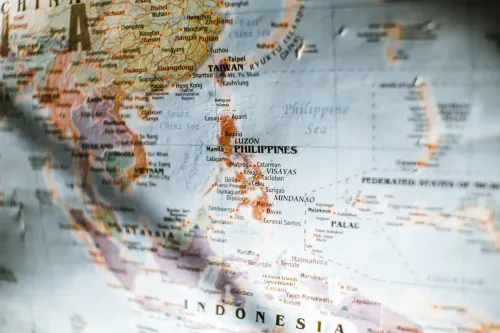
Philippines Geography for Learners: Islands & Language
Philippines geography for Tagalog learners: 7,641 islands, three island groups, and the Southern Luzon heartland where the Tagalog language was born.