amorosa
amorósa with stress marks
loving woman
Usage Note
Amorosa comes from Spanish amorosa and describes a deeply romantic or loving woman — used either as a sincere compliment or with a hint of flirtatiousness. In modern speech it can also imply being excessively romantic or lovesick, following the Spanish gender convention retained in Filipino. Amoroso is the masculine counterpart.
Examples
" Isa siyang tunay na amorosa. "
Natural Translation
She is a truly loving woman.
Literal Translation
One she truly loving-woman.
" Siya ay isang amorosong lalaki na laging may dalang bulaklak para sa kanyang mahal. "
Natural Translation
He/She is a romantic man who always brings flowers for his/her beloved.
Literal Translation
He/She is a loving man who always has brought flowers for the his/her beloved.
" Kilala si Maria bilang amorosa sa kanilang nayon dahil hindi siya nawawalan ng pag-ibig na ibinibigay sa kapwa. "
Natural Translation
Maria is known as a loving woman in their village because she never runs out of love to give to others.
Literal Translation
Known Maria as loving-woman in their village because not she runs-out of love that given to fellow.
Take Tagalog with you
The full course, a 12,500-word dictionary, and flashcards that make every word stick — free to start on iOS and Android.




Tagalog builds thousands of words from a few hundred roots.
How Tagalog words workRelated Words
Explore Tagalog by topic
Free guides on grammar, vocabulary, and culture to take you past single-word lookups.
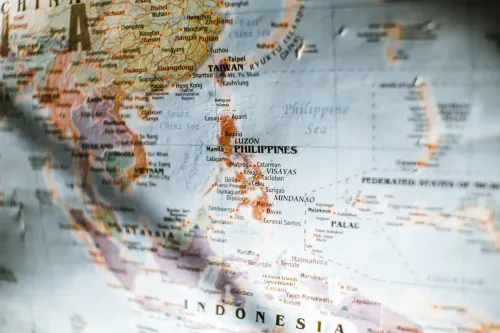
Philippines Geography for Learners: Islands & Language
Philippines geography for Tagalog learners: 7,641 islands, three island groups, and the Southern Luzon heartland where the Tagalog language was born.

Tagalog Verb Conjugation: Aspects Made Simple
Tagalog verb conjugation uses aspects, not tenses. Learn the three aspects with -um- and mag- verbs, one reduplication rule, and clear example tables.

Tagalog Affixes Explained: A Beginner's Guide to Word Building
Tagalog affixes turn one root word into dozens of meanings. Learn prefixes, infixes, suffixes, and circumfixes with clear examples for beginners.

Tagalog Time Expressions: Past, Present & Future Guide
Tagalog has no tenses — it uses aspect. Learn time words, days of the week, clock time, and the aspect system, with vocabulary tables and cultural notes.