From root: anghang
Conjugations
Past (Completed)
inanghangan
i-nang-ha-NGAN
made spicy
Present (Incomplete)
inaanghangan
i-na-ang-ha-NGAN
making spicy
Future (Contemplated)
aanghangan
a-ang-ha-NGAN
will make spicy
Usage Note
Anghangan is used when requesting or describing the act of adding more spice or chili to a specific dish. It is a common instruction given to a cook to increase the heat level of food to suit one's preference.
Examples
" Anghangan mo ang sabaw. "
Natural Translation
Make the broth spicy.
Literal Translation
Make-spicy you the broth.
" Gusto niyang anghangan ang ulam. "
Natural Translation
She wants to make the dish spicy.
Literal Translation
Want he make-spicy the dish.
" Kung gusto mong gayahin ang lutong Bicol, anghangan mo ng sili ang ginataan hanggang sa kumirot na ang dila mo. "
Natural Translation
If you want to copy Bicolano cooking, make the coconut dish spicy with chili until your tongue tingles.
Literal Translation
If want you copy the cooking Bicol, make-spicy you of chili the coconut-dish until that tingle already the tongue your.
Take Tagalog with you
The full course, a 12,500-word dictionary, and flashcards that make every word stick — free to start on iOS and Android.




Tagalog builds thousands of words from a few hundred roots.
How Tagalog words workWord family
anghang has 7 related forms built from the same root.
Related Words
Explore Tagalog by topic
Free guides on grammar, vocabulary, and culture to take you past single-word lookups.
Seasons in the Philippines: A Tagalog Guide
The Philippines has two seasons, not four. Learn tag-araw, tag-ulan, and taglamig, the generative tag- prefix, and the weather vocabulary to match.

Tagalog Word Order: Sentence Structure Made Simple
Why Tagalog puts the verb first, and how ang, ng, and sa markers work. A clear guide to VSO word order, forming questions, and negation.

Magkano: How to Ask "How Much" in Tagalog
Magkano means how much in Tagalog. Learn to ask a price, tell it apart from ilan and gaano, sound polite with po, and haggle at the palengke.
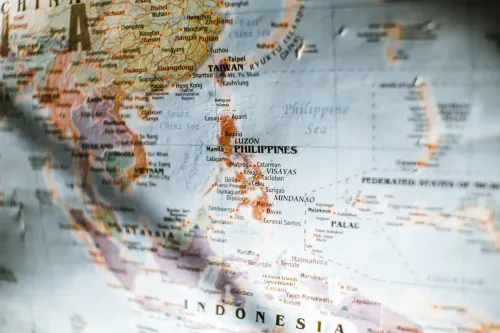
Philippines Geography for Learners: Islands & Language
Philippines geography for Tagalog learners: 7,641 islands, three island groups, and the Southern Luzon heartland where the Tagalog language was born.