anomalya
anomálya with stress marks
anomaly, abnormality
Usage Note
Anomalya is borrowed from Spanish 'anomalía' and in Filipino usage most strongly refers to corruption, irregularity, or scandal — particularly in government and institutional contexts. Saying someone has committed an 'anomalya' in office implies corrupt or fraudulent conduct, going beyond the scientific meaning of mere abnormality.
Examples
" May anomalya sa bilang ng pera. "
Natural Translation
There's an irregularity in the money count.
Literal Translation
Have anomaly in count of money.
" Nag-imbestiga ang senado sa anomalya sa kontrata. "
Natural Translation
The senate investigated the anomaly in the contract.
Literal Translation
Investigated the senate the anomaly in-the contract.
" Matapos lumabas ang anomalya sa proyekto, agad na nag-imbestiga ang mga awtoridad sa mga opisyal na sangkot. "
Natural Translation
After the anomaly in the project came to light, the authorities immediately investigated the officials involved.
Literal Translation
After came-out the anomaly in-the project, immediately investigated the plural authority the plural official that involved.
Take Tagalog with you
The full course, a 12,500-word dictionary, and flashcards that make every word stick — free to start on iOS and Android.




Tagalog builds thousands of words from a few hundred roots.
How Tagalog words workRelated Words
Explore Tagalog by topic
Free guides on grammar, vocabulary, and culture to take you past single-word lookups.

Na vs -ng in Tagalog: The Linker Rule Made Simple
When do you use na vs -ng in Tagalog? One simple rule, with clear examples, memory tips, and common mistakes explained for English-speaking beginners.

Magkano: How to Ask "How Much" in Tagalog
Magkano means how much in Tagalog. Learn to ask a price, tell it apart from ilan and gaano, sound polite with po, and haggle at the palengke.

Tagalog Slang Guide: 20 Words You'll Hear on TikTok
Tagalog slang explained: lodi, petmalu, werpa, astig, chika and more. Decode Filipino TikTok comments, group chats, and pop culture with this practical guide.
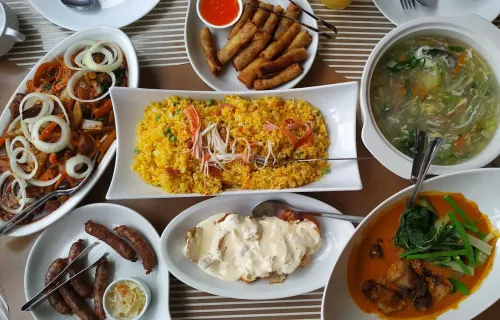
Filipino Food: 12 Essential Dishes (With Tagalog Names)
Filipino food, from adobo to halo-halo: learn the Tagalog names, pronunciations, and ingredients behind 12 dishes you'll want to try on your first trip.