bumalik
bumalík with stress marks
to return

From root: balik
Conjugations
Past (Completed)
bumalik
bu-ma-LIK
returned
Present (Incomplete)
bumabalik
bu-ma-ba-LIK
is returning
Future (Contemplated)
babalik
ba-ba-LIK
will return
Usage Note
Bumalik is the actor-focus infinitive of balik, one of the highest-frequency verbs in Tagalog for returning to a place, person, or state. Deeply embedded in Filipino culture given the strong pull of home and family, reflected in the noun pagbabalik-bayan. Its object-focus counterpart ibalik shifts focus to the thing being returned.
Examples
" Bumalik ka agad. "
Natural Translation
Come back right away.
Literal Translation
Return you immediately.
" Bumalik siya sa Pilipinas noong isang buwan. "
Natural Translation
He/She returned to the Philippines last month.
Literal Translation
Returned he/she to Philippines last month.
" Pagkatapos ng maraming taon sa ibang bansa, bumalik siya sa kanilang nayon upang alagaan ang kanyang mga magulang. "
Natural Translation
After many years abroad, he/she returned to their village to take care of his/her parents.
Literal Translation
After of many years in other country, returned he/she to their village in-order-to take-care-of the his/her parents.
Take Tagalog with you
The full course, a 12,500-word dictionary, and flashcards that make every word stick — free to start on iOS and Android.




Tagalog builds thousands of words from a few hundred roots.
How Tagalog words workWord family
balik has 1 related form built from the same root.
Related Words
Explore Tagalog by topic
Free guides on grammar, vocabulary, and culture to take you past single-word lookups.
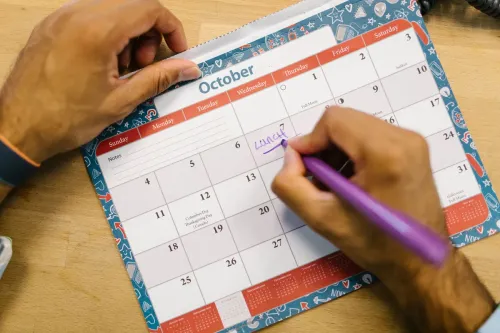
Days of the Week and Months in Tagalog
The days of the week and months in Tagalog are Spanish loanwords. Learn all 7 days and 12 months with pronunciation, plus how to say dates and 'every Monday.'

Ng vs Nang in Tagalog: The Spelling Rule
Ng vs nang sound identical but spell differently. Use ng to mark nouns (of, the object), and nang for how, when, repetition, and counting time.

Po and Opo in Tagalog: Where to Put Them Right
Po and opo confuse learners — but placement follows one rule. Where po goes in a sentence, why it's opo not 'oo po', and the pronoun shift to learn.

Languages of the Philippines: Tagalog, Cebuano, and More
Languages of the Philippines: one national language (Filipino) plus 180+ regional languages. Here's who speaks what, where, and why it matters to you.