From root: balut
Conjugations
Past (Completed)
ipinabalot
i-pi-na-ba-LOT
had wrapped
Present (Incomplete)
ipinapabalot
i-pi-na-pa-ba-LOT
having wrapped
Future (Contemplated)
ipapabalot
i-pa-pa-ba-LOT
will have wrapped
Usage Note
Ipabalot is commonly used in restaurants and food establishments when asking a server or staff member to wrap leftovers or a new order for takeout.
Examples
" Ipabalot mo ang pagkain. "
Natural Translation
Have the food wrapped.
Literal Translation
Have-wrapped you the food.
" Gusto kong ipabalot ang keyk. "
Natural Translation
I want to have the cake wrapped.
Literal Translation
Want I have-wrapped the cake.
" Dahil hindi na namin maubos ang ulam, ipinabalot na lang namin sa serbidor para may baon kami bukas. "
Natural Translation
Since we could no longer finish the food, we just had it wrapped by the waiter so we'd have something to bring tomorrow.
Literal Translation
Because not anymore we can-finish the dish, had-wrapped just we to waiter so have packed-meal we tomorrow.
Take Tagalog with you
The full course, a 12,500-word dictionary, and flashcards that make every word stick — free to start on iOS and Android.




Tagalog builds thousands of words from a few hundred roots.
How Tagalog words workWord family
balut has 8 related forms built from the same root.
Related Words
Explore Tagalog by topic
Free guides on grammar, vocabulary, and culture to take you past single-word lookups.

Tagalog Greetings: How to Say Hello, Goodbye & Po/Opo
Master Tagalog greetings with pronunciation: kumusta, magandang umaga, po and opo polite forms, time-of-day phrases, and the mano po tradition.
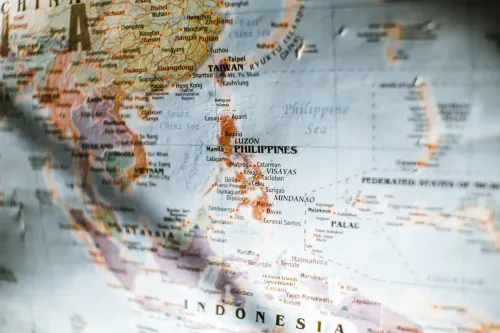
Philippines Geography for Learners: Islands & Language
Philippines geography for Tagalog learners: 7,641 islands, three island groups, and the Southern Luzon heartland where the Tagalog language was born.

Ang, Ng, Sa: The 3 Tagalog Case Markers Explained
Ang, ng, sa are the three Tagalog case markers every noun takes. Learn what each does, the personal forms si/ni/kay, plurals with mga, and clear examples.

How to Say "I Love You" in Tagalog: Phrases & Meaning
Learn how to say I love you in Tagalog. Mahal kita, Iniibig kita, and Filipino terms of endearment for partners, family, and friends — with cultural notes.