From root: bango
Conjugations
Past (Completed)
bumango
bu-ma-NGO
became fragrant
Present (Incomplete)
bumabango
bu-ma-ba-NGO
becoming fragrant
Future (Contemplated)
babango
ba-ba-NGO
will become fragrant
Usage Note
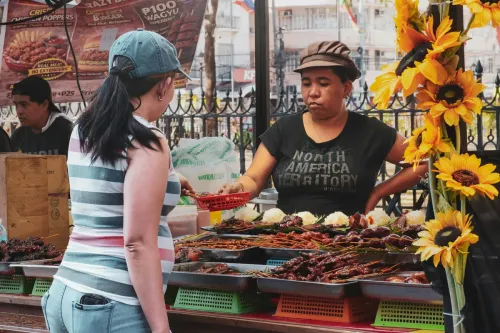
Bumango is used to describe something or someone that has transitioned into having a pleasant scent, often after applying perfume or while cooking aromatic food. It focuses on the change in state rather than just the quality of the smell.
Examples
" Bumango ang kusina. "
Natural Translation
The kitchen became fragrant.
Literal Translation
Became-fragrant the kitchen.
" Nagsimulang bumango ang mga bulaklak. "
Natural Translation
The flowers started to become fragrant.
Literal Translation
Started become-fragrant the flower.
" Bumango ang buong bahay nang magsimula siyang magprito ng bawang at sibuyas para sa hapunan. "
Natural Translation
The whole house became fragrant when she started frying garlic and onions for dinner.
Literal Translation
Became-fragrant the whole house when started she fry of garlic and onion for dinner.
Take Tagalog with you
The full course, a 12,500-word dictionary, and flashcards that make every word stick — free to start on iOS and Android.




Tagalog builds thousands of words from a few hundred roots.
How Tagalog words workWord family
bango has 8 related forms built from the same root.
Related Words
Explore Tagalog by topic
Free guides on grammar, vocabulary, and culture to take you past single-word lookups.

Ng vs Nang in Tagalog: The Spelling Rule
Ng vs nang sound identical but spell differently. Use ng to mark nouns (of, the object), and nang for how, when, repetition, and counting time.
May vs Mayroon vs Meron: Have & There Is
May vs mayroon in Tagalog finally made simple: one rule decides which to use, plus how meron and wala fit the same have and there-is family.

Tagalog Greetings: How to Say Hello, Goodbye & Po/Opo
Master Tagalog greetings with pronunciation: kumusta, magandang umaga, po and opo polite forms, time-of-day phrases, and the mano po tradition.

Na vs -ng in Tagalog: The Linker Rule Made Simple
When do you use na vs -ng in Tagalog? One simple rule, with clear examples, memory tips, and common mistakes explained for English-speaking beginners.