
From root: barko
Conjugations
Past (Completed)
ipinabarko
i-pi-na-BAR-ko
had shipped
Present (Incomplete)
ipinapabarko
i-pi-na-pa-BAR-ko
having shipped
Future (Contemplated)
ipapabarko
i-pa-pa-BAR-ko
will have shipped
Usage Note
Ipabarko is used when arranging for goods, such as vehicles or large cargo, to be transported specifically via a ship or sea vessel. It is a common term in logistics and when sending items between the various islands of the Philippines.
Examples
" Ipinabarko namin ang kotse. "
Natural Translation
We had the car shipped by sea.
Literal Translation
Had-shipped we the car.
" Kailangan mong ipabarko ang mga libro. "
Natural Translation
You need to have the books shipped.
Literal Translation
Need you have-shipped the plural books.
" Dahil masyadong mabigat ang mga gamit, napagdesisyunan naming ipabarko na lang ang lahat patungong Cebu. "
Natural Translation
Because the things were too heavy, we decided to just have everything shipped by sea to Cebu.
Literal Translation
Because too-heavy the plural things, decided we have-shipped just the all toward Cebu.
Take Tagalog with you
The full course, a 12,500-word dictionary, and flashcards that make every word stick — free to start on iOS and Android.




Tagalog builds thousands of words from a few hundred roots.
How Tagalog words workWord family
barko has 5 related forms built from the same root.
Related Words
Explore Tagalog by topic
Free guides on grammar, vocabulary, and culture to take you past single-word lookups.

Seasons in the Philippines: A Tagalog Guide
The Philippines has two seasons, not four. Learn tag-araw, tag-ulan, and taglamig, the generative tag- prefix, and the weather vocabulary to match.

Philippine Christmas Traditions: World's Longest Holiday
Philippine Christmas traditions run four months — from Ber-month carols to Simbang Gabi dawn masses, Noche Buena feasts, and parol lanterns lighting every street.
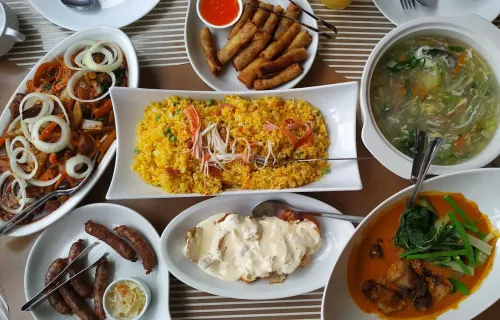
Filipino Food: 12 Essential Dishes (With Tagalog Names)
Filipino food, from adobo to halo-halo: learn the Tagalog names, pronunciations, and ingredients behind 12 dishes you'll want to try on your first trip.

Po and Opo in Tagalog: Where to Put Them Right
Po and opo confuse learners — but placement follows one rule. Where po goes in a sentence, why it's opo not 'oo po', and the pronoun shift to learn.