batidor
batidór with stress marks
copper pitcher for chocolate
Usage Note
Batidor comes from Spanish batidor (beater/whisk) and in the Philippines refers to the traditional copper vessel used to froth and serve hot chocolate (tsokolate), particularly during the Spanish colonial era. It remains a symbol of Filipino-Spanish culinary heritage and appears in antique collections and heritage kitchens.
Examples
" Luma na ang batidor namin. "
Natural Translation
Our copper pitcher is already old.
Literal Translation
Old already the copper-pitcher our.
" Ginagamit ng lola ang batidor para sa mainit na tsokolate. "
Natural Translation
Grandmother uses the copper pitcher for hot chocolate.
Literal Translation
Used-by the grandmother the copper-pitcher for the hot chocolate.
" Sa lumang kusina ng bahay-na-bato, nakatabi pa rin ang batidor na ginagamit ng pamilya tuwing Pasko noong panahon ng Kastila. "
Natural Translation
In the old kitchen of the stone house, the copper pitcher the family used every Christmas during the Spanish era is still kept.
Literal Translation
In old kitchen of stone-house, kept still also the copper-pitcher that used by-the family every Christmas during era of Spanish.
Take Tagalog with you
The full course, a 12,500-word dictionary, and flashcards that make every word stick — free to start on iOS and Android.




Tagalog builds thousands of words from a few hundred roots.
How Tagalog words workRelated Words
Explore Tagalog by topic
Free guides on grammar, vocabulary, and culture to take you past single-word lookups.

Tagalog Word Order: Sentence Structure Made Simple
Why Tagalog puts the verb first, and how ang, ng, and sa markers work. A clear guide to VSO word order, forming questions, and negation.

How Long Does It Take to Learn Tagalog?
Survival Tagalog takes ~3-4 weeks and comfortable conversation 6-12 months. FSI's 1,100 hours is the professional bar, not the talking-to-family bar.

Ang, Ng, Sa: The 3 Tagalog Case Markers Explained
Ang, ng, sa are the three Tagalog case markers every noun takes. Learn what each does, the personal forms si/ni/kay, plurals with mga, and clear examples.
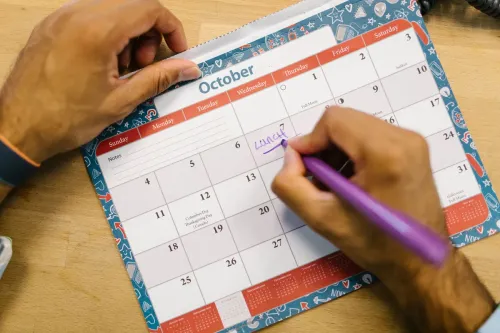
Days of the Week and Months in Tagalog
The days of the week and months in Tagalog are Spanish loanwords. Learn all 7 days and 12 months with pronunciation, plus how to say dates and 'every Monday.'