From root: bayani
Usage Note
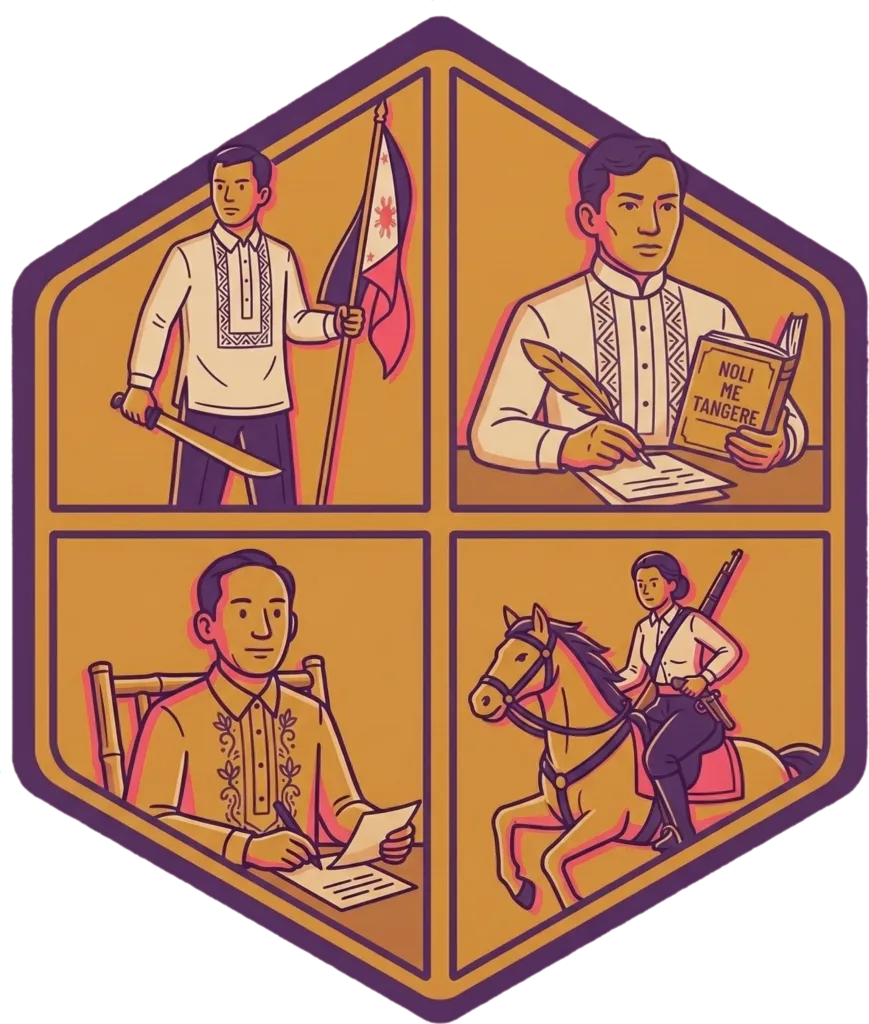
Kabayanihan refers to the brave and selfless acts performed by a hero. It is a common theme during National Heroes' Day celebrations in the Philippines.
Examples
" Hangang-hanga ako sa kanilang kabayanihan. "
Natural Translation
I admire their heroism.
Literal Translation
Admiring I at their heroism.
" Salamat sa kabayanihan ninyo. "
Natural Translation
Thank you for your heroism.
Literal Translation
Thanks to heroism your-all.
" Ang kabayanihan ng mga sundalong nag-alay ng buhay para sa kalayaan ay hindi malilimutan ng sambayanan. "
Natural Translation
The heroism of the soldiers who gave their lives for freedom will not be forgotten by the nation.
Literal Translation
The heroism of plural soldier-linker offered of life for the freedom will not be-forgotten by-the nation.
Take Tagalog with you
The full course, a 12,500-word dictionary, and flashcards that make every word stick — free to start on iOS and Android.




Tagalog builds thousands of words from a few hundred roots.
How Tagalog words workWord family
bayani has 7 related forms built from the same root.
Related Words
Explore Tagalog by topic
Free guides on grammar, vocabulary, and culture to take you past single-word lookups.

Tagalog Verb Conjugation: Aspects Made Simple
Tagalog verb conjugation uses aspects, not tenses. Learn the three aspects with -um- and mag- verbs, one reduplication rule, and clear example tables.

Tagalog Greetings: How to Say Hello, Goodbye & Po/Opo
Master Tagalog greetings with pronunciation: kumusta, magandang umaga, po and opo polite forms, time-of-day phrases, and the mano po tradition.

Ng vs Nang in Tagalog: The Spelling Rule
Ng vs nang sound identical but spell differently. Use ng to mark nouns (of, the object), and nang for how, when, repetition, and counting time.

Languages of the Philippines: Tagalog, Cebuano, and More
Languages of the Philippines: one national language (Filipino) plus 180+ regional languages. Here's who speaks what, where, and why it matters to you.