buklod
buklód with stress marks
bound, united
Usage Note
Buklod expresses a sense of being bound together — by love, obligation, shared purpose, or physical fastening. It appears frequently in formal, nationalistic, and literary contexts. The derived form pagbubuklod means the act of uniting or binding, often used in civic and community discourse.
Examples
" Buklod kami ng pag-ibig. "
Natural Translation
We are bound by love.
Literal Translation
Bound we by love.
" Buklod ng pagmamahal ang pamilyang ito. "
Natural Translation
This family is bound by love.
Literal Translation
Bound by love the family this.
" Kahit malayo ang bawat isa sa amin, nananatiling matibay ang buklod ng pamilyang hinubog ng mga taon ng pagmamahalan. "
Natural Translation
Even though each of us is far apart, the bond of the family forged by years of love remains strong.
Literal Translation
Even-though far each one of us, remaining strong the bond of family shaped by years of loving.
Take Tagalog with you
The full course, a 12,500-word dictionary, and flashcards that make every word stick — free to start on iOS and Android.




Tagalog builds thousands of words from a few hundred roots.
How Tagalog words workRelated Words
Explore Tagalog by topic
Free guides on grammar, vocabulary, and culture to take you past single-word lookups.

Tagalog Greetings: How to Say Hello, Goodbye & Po/Opo
Master Tagalog greetings with pronunciation: kumusta, magandang umaga, po and opo polite forms, time-of-day phrases, and the mano po tradition.
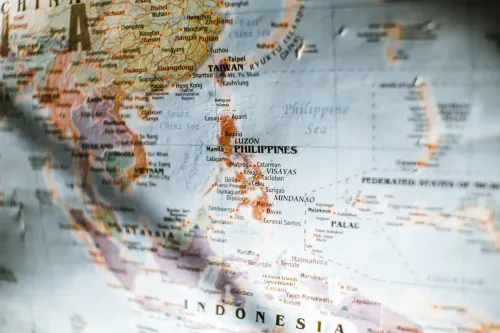
Philippines Geography for Learners: Islands & Language
Philippines geography for Tagalog learners: 7,641 islands, three island groups, and the Southern Luzon heartland where the Tagalog language was born.

Tagalog Verb Focus System Explained (It's Not Active vs. Passive)
The Tagalog verb focus system isn't active vs. passive. Learn actor focus, object focus, and more with clear examples that finally make it click.
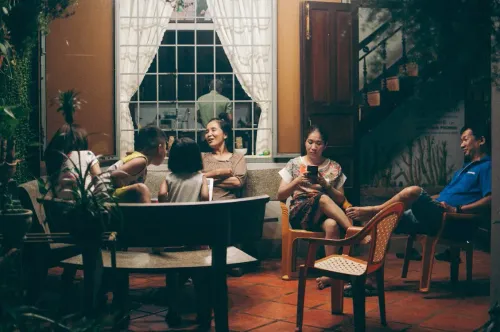
Filipino Family Words and Honorifics: Ate, Kuya & Tita
Filipino family words like ate, kuya, tita, tito, lolo, and lola go far beyond family — learn how Filipinos use them with strangers, plus mano po etiquette.