guhit-palad
guhit-palád with stress marks
fate
Usage Note
Guhit-palad literally means 'line of the palm' and refers to one's fate or destiny as if written in the lines of the hand. It is a poetic compound used in literary and philosophical discourse, evoking the Filipino belief in a predestined life course.
Examples
" Tanggap ko ang aking guhit-palad. "
Natural Translation
I accept my fate.
Literal Translation
Accept I the my fate.
" Tanggap ko ang guhit-palad. "
Natural Translation
I accept my fate.
Literal Translation
Accept I the fate.
" Naniniwala ang matatanda na ang guhit-palad ng bawat tao ay nakasulat na bago pa siya isilang sa mundo. "
Natural Translation
The elders believe that each person's fate is already written even before he is born into the world.
Literal Translation
Believe the elders that the fate of every person is written already before yet he born in world.
Take Tagalog with you
The full course, a 12,500-word dictionary, and flashcards that make every word stick — free to start on iOS and Android.




Tagalog builds thousands of words from a few hundred roots.
How Tagalog words workRelated Words
Explore Tagalog by topic
Free guides on grammar, vocabulary, and culture to take you past single-word lookups.
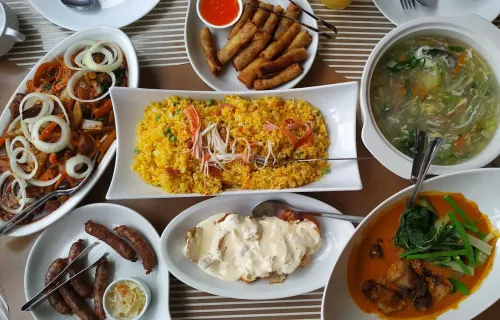
Filipino Food: 12 Essential Dishes (With Tagalog Names)
Filipino food, from adobo to halo-halo: learn the Tagalog names, pronunciations, and ingredients behind 12 dishes you'll want to try on your first trip.
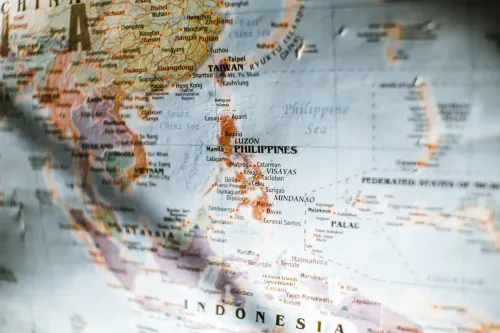
Philippines Geography for Learners: Islands & Language
Philippines geography for Tagalog learners: 7,641 islands, three island groups, and the Southern Luzon heartland where the Tagalog language was born.

Ng vs Nang in Tagalog: The Spelling Rule
Ng vs nang sound identical but spell differently. Use ng to mark nouns (of, the object), and nang for how, when, repetition, and counting time.

Tagalog Verb Focus System Explained (It's Not Active vs. Passive)
The Tagalog verb focus system isn't active vs. passive. Learn actor focus, object focus, and more with clear examples that finally make it click.