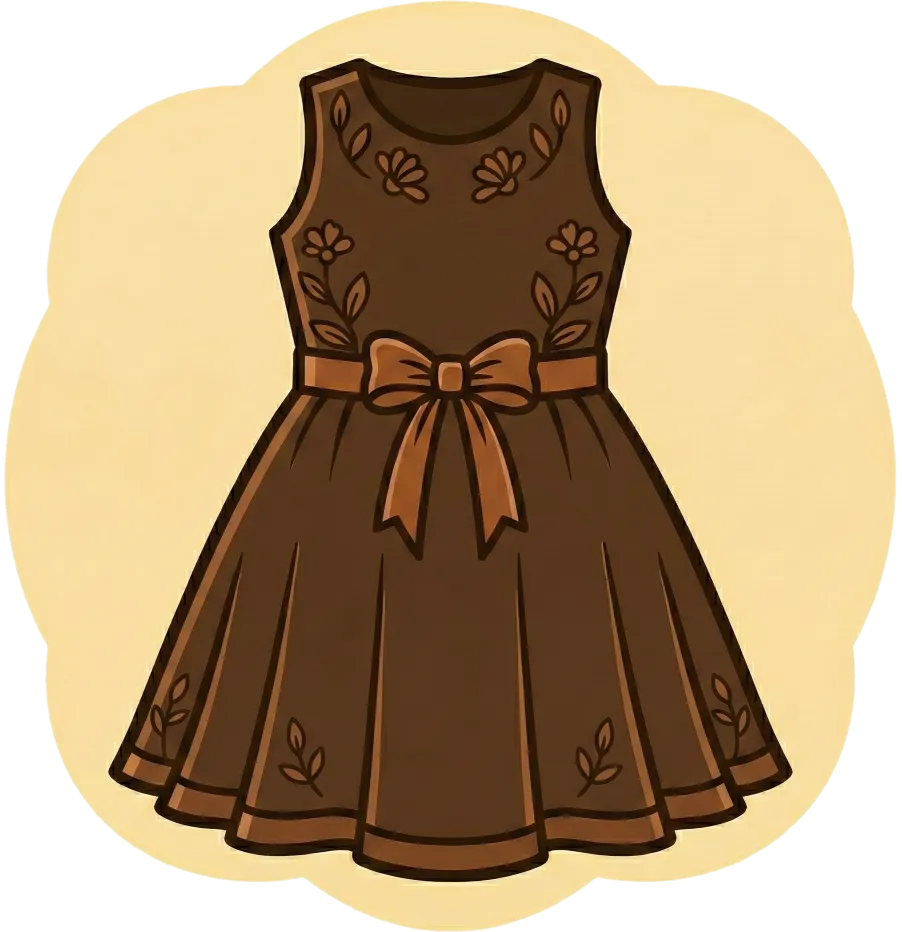
From root: bestida
Conjugations
Past (Completed)
nagbestida
nag-bes-TI-da
wore a dress
Present (Incomplete)
nagbebestida
nag-be-bes-TI-da
is wearing a dress
Future (Contemplated)
magbebestida
mag-be-bes-TI-da
will wear a dress
Usage Note
Magbestida is used when someone puts on or wears a dress, often implying a more formal or feminine style compared to wearing casual clothes. It is commonly heard when discussing dressing up for special occasions, church services, or social gatherings.
Examples
" Magbestida tayo ngayon. "
Natural Translation
Let's wear dresses today.
Literal Translation
Wear-dress we now.
" Magbestida ka para maganda ka sa litrato. "
Natural Translation
Wear a dress so you will look pretty in the picture.
Literal Translation
Wear-dress you so pretty you in picture.
" Nagbestida ang aking lola para sa misa kahit napakainit ng panahon kaninang umaga. "
Natural Translation
My grandmother wore a dress for the Mass even though the weather was very hot this morning.
Literal Translation
Wore-dress the my grandmother for the Mass even very-hot the weather earlier morning.
Take Tagalog with you
The full course, a 12,500-word dictionary, and flashcards that make every word stick — free to start on iOS and Android.




Tagalog builds thousands of words from a few hundred roots.
How Tagalog words workWord family
bestida has 5 related forms built from the same root.
Related Words
Explore Tagalog by topic
Free guides on grammar, vocabulary, and culture to take you past single-word lookups.

Seasons in the Philippines: A Tagalog Guide
The Philippines has two seasons, not four. Learn tag-araw, tag-ulan, and taglamig, the generative tag- prefix, and the weather vocabulary to match.

Tagalog Question Words: Ano, Sino, Saan & More
Tagalog question words like ano, sino, and saan need the right frame to work. Learn the ang-vs-pronoun rule, confusable pairs, and the ba particle with audio.
Philippine Christmas Traditions: World's Longest Holiday
Philippine Christmas traditions run four months — from Ber-month carols to Simbang Gabi dawn masses, Noche Buena feasts, and parol lanterns lighting every street.

Ng vs Nang in Tagalog: The Spelling Rule
Ng vs nang sound identical but spell differently. Use ng to mark nouns (of, the object), and nang for how, when, repetition, and counting time.