
From root: buhangin
Conjugations
Past (Completed)
ibinuhangin
i-bi-nu-HA-ngin
used sand
Present (Incomplete)
ibinubuhangin
i-bi-nu-bu-HA-ngin
using sand
Future (Contemplated)
ibubuhangin
i-bu-bu-HA-ngin
will use sand
Usage Note
Ibuhangin is used when specifying that sand should be the material used for a particular purpose, such as filling a hole or as an abrasive for cleaning. It is a formal or technical term most often encountered in construction or instructional contexts.
Examples
" Ibuhangin natin ang butas. "
Natural Translation
Let's use sand on the hole.
Literal Translation
Use-sand we the hole.
" Gusto niyang ibuhangin ang daan. "
Natural Translation
He wants to use sand on the path.
Literal Translation
Want he use-sand the path.
" Iminungkahi ng inhinyero na ibuhangin ang sahig dahil mas matibay ito kaysa sa malambot na lupa. "
Natural Translation
The engineer suggested using sand for the base because it is sturdier than soft soil.
Literal Translation
Suggested the engineer that use-sand the floor because more sturdy it than soft soil.
Take Tagalog with you
The full course, a 12,500-word dictionary, and flashcards that make every word stick — free to start on iOS and Android.




Tagalog builds thousands of words from a few hundred roots.
How Tagalog words workWord family
buhangin has 4 related forms built from the same root.
Related Words
Explore Tagalog by topic
Free guides on grammar, vocabulary, and culture to take you past single-word lookups.

How to Say "I Love You" in Tagalog: Phrases & Meaning
Learn how to say I love you in Tagalog. Mahal kita, Iniibig kita, and Filipino terms of endearment for partners, family, and friends — with cultural notes.
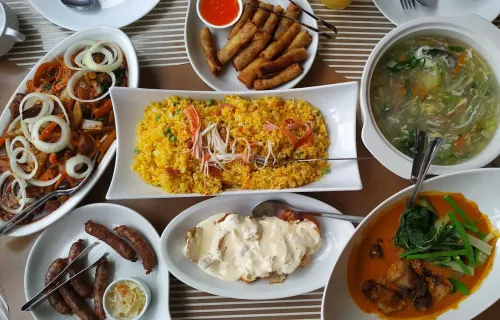
Filipino Food: 12 Essential Dishes (With Tagalog Names)
Filipino food, from adobo to halo-halo: learn the Tagalog names, pronunciations, and ingredients behind 12 dishes you'll want to try on your first trip.

Mano Po and Filipino Etiquette: A Visitor's Guide
Mano po presses an elder's hand to your forehead as a blessing. Learn who to mano, how to lip-point, and the etiquette that wins over a Filipino family.

Tagalog vs Filipino: What's the Difference & Which to Learn
Tagalog and Filipino aren't the same language — but they overlap almost completely. Here's the real difference and which one you should actually learn.