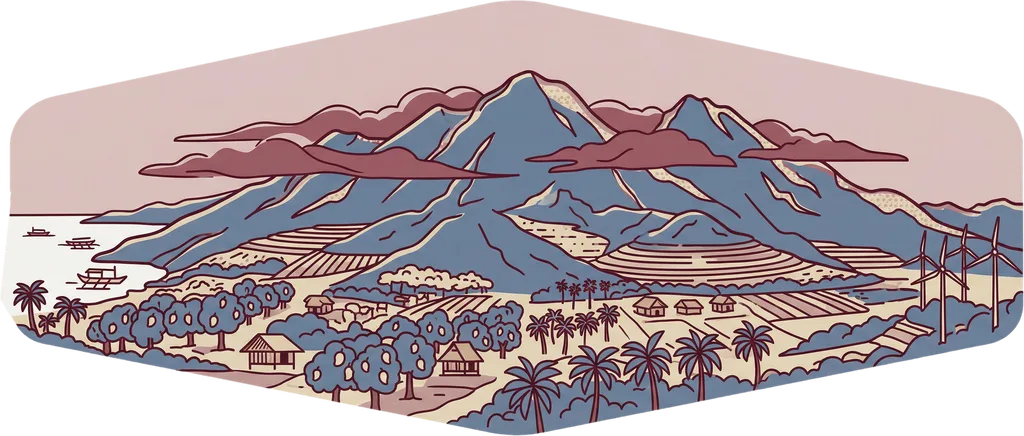
From root: bundok
Conjugations
Past (Completed)
nagbundok
nag-bun-DOK
stayed in the mountains
Present (Incomplete)
nagbubundok
nag-bu-bun-DOK
is staying in the mountains
Future (Contemplated)
magbubundok
mag-bu-bun-DOK
will stay in the mountains
Usage Note
Magbundok is used to describe the act of retreating to or living in the mountains, often implying a long-term stay for seclusion or to join a movement. It is less about recreational hiking and more about a significant change in lifestyle or seeking refuge.
Examples
" Natakot silang magbundok. "
Natural Translation
They were afraid to stay in the mountains.
Literal Translation
Afraid they to-stay-in-mountains.
" Napilitan silang magbundok dahil sa giyera. "
Natural Translation
They were forced to hide/stay in the mountains because of the war.
Literal Translation
Forced they to stay-in-mountains because of war.
" Maraming magsasaka ang napilitang magbundok noong panahon ng digmaan upang makaiwas sa mga sundalo. "
Natural Translation
Many farmers were forced to take refuge in the mountains during the war in order to escape the soldiers.
Literal Translation
Many farmers the forced to-stay-in-mountains during time of war so-that to-escape from the soldiers.
Take Tagalog with you
The full course, a 12,500-word dictionary, and flashcards that make every word stick — free to start on iOS and Android.




Tagalog builds thousands of words from a few hundred roots.
How Tagalog words workWord family
bundok has 7 related forms built from the same root.
Related Words
Explore Tagalog by topic
Free guides on grammar, vocabulary, and culture to take you past single-word lookups.

Philippine Christmas Traditions: World's Longest Holiday
Philippine Christmas traditions run four months — from Ber-month carols to Simbang Gabi dawn masses, Noche Buena feasts, and parol lanterns lighting every street.

Tagalog Affixes Explained: A Beginner's Guide to Word Building
Tagalog affixes turn one root word into dozens of meanings. Learn prefixes, infixes, suffixes, and circumfixes with clear examples for beginners.
Tagalog Root Words: Learn a Few Hundred, Understand Thousands
Tagalog root words unlock vocabulary fast: learn a few hundred and recognize thousands. Real word families, examples, and a practical study strategy.

Tagalog Greetings: How to Say Hello, Goodbye & Po/Opo
Master Tagalog greetings with pronunciation: kumusta, magandang umaga, po and opo polite forms, time-of-day phrases, and the mano po tradition.