cariñosa
Philippine courtship dance
Usage Note
Cariñosa is one of the Philippine national folk dances, depicting a romantic courtship through hide-and-seek movements with fans and handkerchiefs. The name comes from the Spanish for 'affectionate.' It is performed at cultural events, school programs, and fiestas, and is a core part of Philippine folk-dance education.
Examples
" Nagsayaw sila ng cariñosa. "
Natural Translation
They danced the cariñosa.
Literal Translation
Danced they cariñosa.
" Nagsayaw sila ng cariñosa sa fiesta ng bayan. "
Natural Translation
They danced the cariñosa at the town fiesta.
Literal Translation
Danced they cariñosa at-the fiesta of-the town.
" Sa programa ng paaralan, ipinakita ng mga mag-aaral ang cariñosa, isang sayaw na nagpapahiwatig ng mahinhing panliligaw sa pamamagitan ng abaniko. "
Natural Translation
At the school program, the students performed the cariñosa, a dance that conveys demure courtship through the use of a fan.
Literal Translation
At-the program of school, showed the students the cariñosa, one dance that suggests of modest courtship through the use of fan.
Take Tagalog with you
The full course, a 12,500-word dictionary, and flashcards that make every word stick — free to start on iOS and Android.




Tagalog builds thousands of words from a few hundred roots.
How Tagalog words workRelated Words
Explore Tagalog by topic
Free guides on grammar, vocabulary, and culture to take you past single-word lookups.
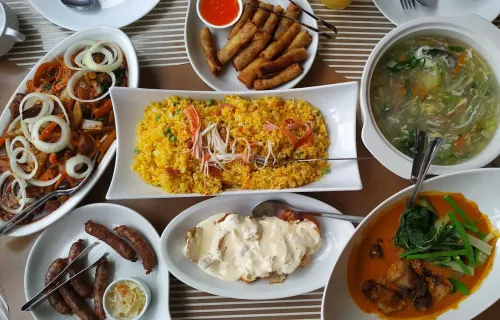
Filipino Food: 12 Essential Dishes (With Tagalog Names)
Filipino food, from adobo to halo-halo: learn the Tagalog names, pronunciations, and ingredients behind 12 dishes you'll want to try on your first trip.

How to Say "I Love You" in Tagalog: Phrases & Meaning
Learn how to say I love you in Tagalog. Mahal kita, Iniibig kita, and Filipino terms of endearment for partners, family, and friends — with cultural notes.

Tagalog Verb Focus System Explained (It's Not Active vs. Passive)
The Tagalog verb focus system isn't active vs. passive. Learn actor focus, object focus, and more with clear examples that finally make it click.

Tagalog Word Order: Sentence Structure Made Simple
Why Tagalog puts the verb first, and how ang, ng, and sa markers work. A clear guide to VSO word order, forming questions, and negation.