
From root: daan
Conjugations
Past (Completed)
dinaanan
di-na-A-nan
passed by or through
Present (Incomplete)
dinadaanan
di-na-da-A-nan
passing by or through
Future (Contemplated)
dadaanan
da-da-A-nan
will pass by or through
Usage Note
Daanan is used when expressing the intent to stop by a place or pick someone up while en route to a destination. It emphasizes the specific location or person that is being visited briefly as part of a larger trip.
Examples
" Daanan mo ako mamaya. "
Natural Translation
Pick me up later.
Literal Translation
Pass-by you me later.
" Gusto kong daanan ang tindahan. "
Natural Translation
I want to pass by the store.
Literal Translation
Want I pass-by the store.
" Daanan mo muna ang panaderya bago ka umuwi para may makain kami sa almusal bukas. "
Natural Translation
Stop by the bakery first before you head home so we'll have something to eat for breakfast tomorrow.
Literal Translation
Pass-by you first the bakery before you go-home so has can-be-eaten we in breakfast tomorrow.
Take Tagalog with you
The full course, a 12,500-word dictionary, and flashcards that make every word stick — free to start on iOS and Android.




Tagalog builds thousands of words from a few hundred roots.
How Tagalog words workWord family
daan has 8 related forms built from the same root.
Related Words
Explore Tagalog by topic
Free guides on grammar, vocabulary, and culture to take you past single-word lookups.

Tagalog Greetings: How to Say Hello, Goodbye & Po/Opo
Master Tagalog greetings with pronunciation: kumusta, magandang umaga, po and opo polite forms, time-of-day phrases, and the mano po tradition.

Tagalog Verb Focus System Explained (It's Not Active vs. Passive)
The Tagalog verb focus system isn't active vs. passive. Learn actor focus, object focus, and more with clear examples that finally make it click.
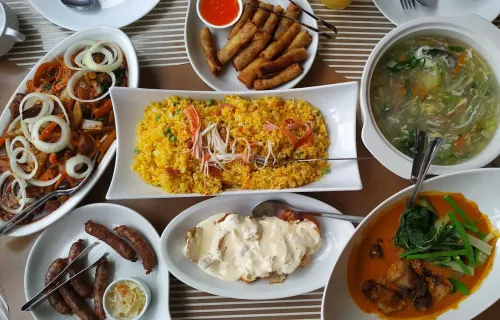
Filipino Food: 12 Essential Dishes (With Tagalog Names)
Filipino food, from adobo to halo-halo: learn the Tagalog names, pronunciations, and ingredients behind 12 dishes you'll want to try on your first trip.

Tagalog Word Order: Sentence Structure Made Simple
Why Tagalog puts the verb first, and how ang, ng, and sa markers work. A clear guide to VSO word order, forming questions, and negation.